
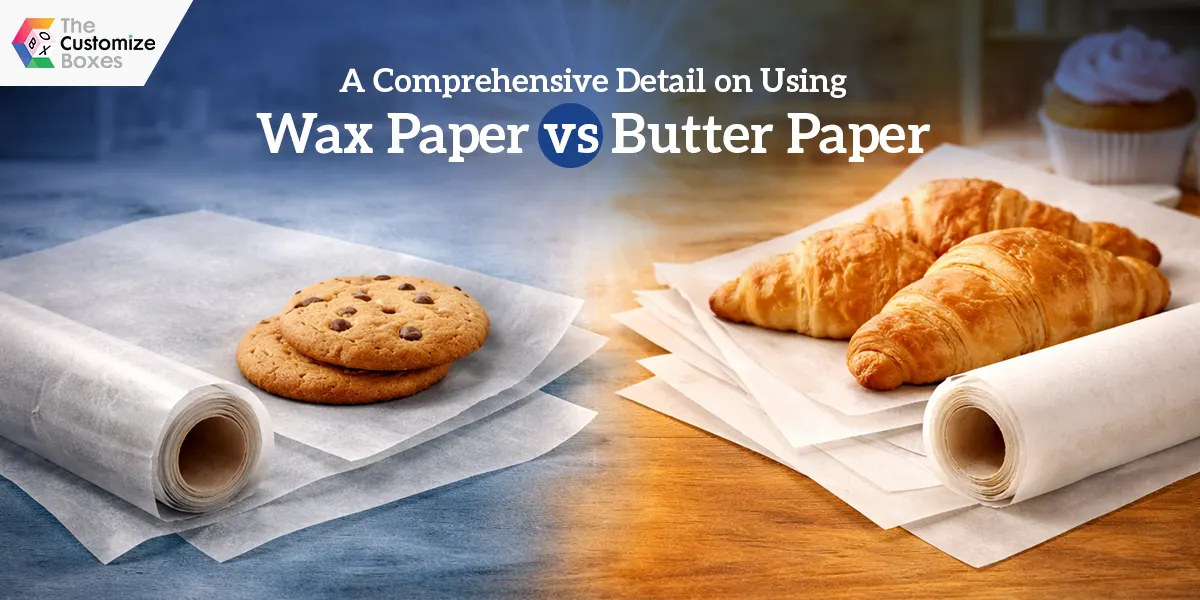
Whether you are a baker, a pastry chef, or a food brand, wax paper and butter paper have become kitchen staples. Both types make cooking and cleaning easier while allowing easy cleanup of your baking pans and trays.
From a business perspective, the wax paper market is more likely to expand at a CAGR of 4.2% by 2034. However, the butter paper market is expected to reach a CAGR of 4.2% by 2031. Although both have huge potential in the food industry, you must know their distinct properties to make the best use of them. Let’s explore wax paper vs. butter paper in detail!
An Overview of Wax Paper
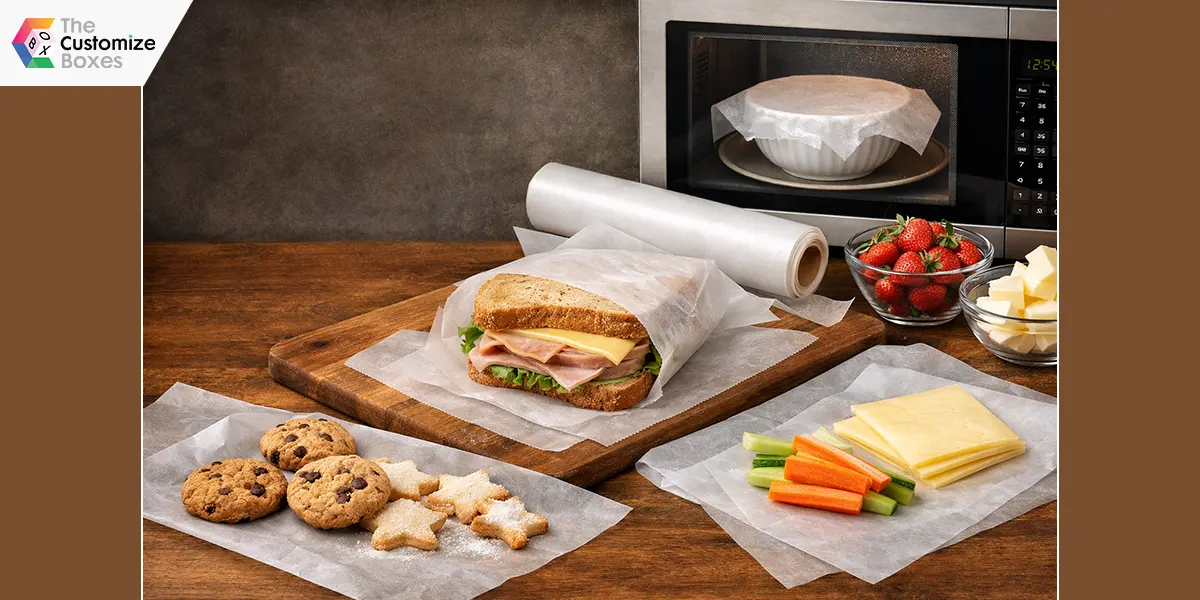
As its name indicates, wax paper has literally wax on it. And that’s why it is also called “waxed paper.” Because of the paraffin or soybean wax coating on both sides, this paper becomes moisture-resistant, non-stick, and food-safe.
The majority of chefs, bakers, and cooks use wax paper for food storage, wrapping sandwiches, and lining pans for non-baked goods. But keep in mind, you can only keep waxed paper in the microwave for covering splatters, as it is not oven-safe. You can also use this paper in kitchens to prevent sticking.
Distinct Properties of Wax Paper
- Moisture & Grease Resistance: The coating makes it an excellent barrier for wrapping moist foods like cheese, sandwiches, and for lining food containers.
- Non-Stick Surface: Ideal for placing between food items to prevent sticking, or for lining pans when prepping, but not for high-temperature baking.
- Microwave Safe: It can be used in the microwave to cover food, which helps prevent splatters, but it should not be used for long, high-heat cooking.
- Material: Usually made with petroleum-derived paraffin wax, though sustainable plant-based options exist.
An Overview of Butter Paper
Butter paper is also known as “greaseproof paper.” It is also moisture-resistant, food-grade, and non-stick paper, like wax paper. You can widely use it for lining baking pans, separating food items, and wrapping greasy products like sandwiches and cheese.
While using butter paper, ensure clean handling, heat-resistance, and food preservation. Its heat-resistant capability makes it suitable for oven use compared to wax paper. There are three main types of butter paper, such as:
- Coated (Wax/Silicone): Provides maximum grease resistance and non-stick performance.
- Uncoated/Glassine: A dense, smooth, and grease-resistant paper, often 60 GSM.
- Custom Printed: Food businesses use this type for branding with printed logos.
Distinct Properties of Wax Paper
- Greaseproof & Moisture-Resistant: Prevents oils and fats from seeping through, making it ideal for messy foods.
- Non-Stick Surface: Ensures baked goods do not stick to trays, simplifying cleanup.
- Food-Grade & Safe: Hygienic for direct contact with food.
- Heat Resistant: Suitable for oven use (420 to 450 degrees Fahrenheit), though not all types are suited for high-temperature baking.
- Eco-Friendly: Often made from biodegradable, recyclable materials.
Explore the Difference Between Wax Paper vs. Butter Paper
Butter paper can be replaced with wax paper, but wax paper cannot be replaced with butter paper in the oven due to its heat resistance. Other multiple features that differentiate wax paper from butter paper are:
|
Features |
Wax Paper |
Butter Paper |
|
Heat Resistance |
Can only withstand up to 200 degrees Fahrenheit and melts or smokes if placed in an oven for heating |
Significantly withstand in microwave for temperature upto 400+ degrees Fahrenheit |
|
Coating |
Paraffin or Soybean |
Silicone |
|
Uses |
Popular for freezing food, preparing food, or wrapping sandwiches |
Ideal to use for lining baking trays, cakes, or pizza |
|
Cost |
Less expensive than butter paper |
Costly due to the silicone coating that makes it superior in grease resistance |
Wax Paper vs. Butter Paper: Which One is Best for Cakes?
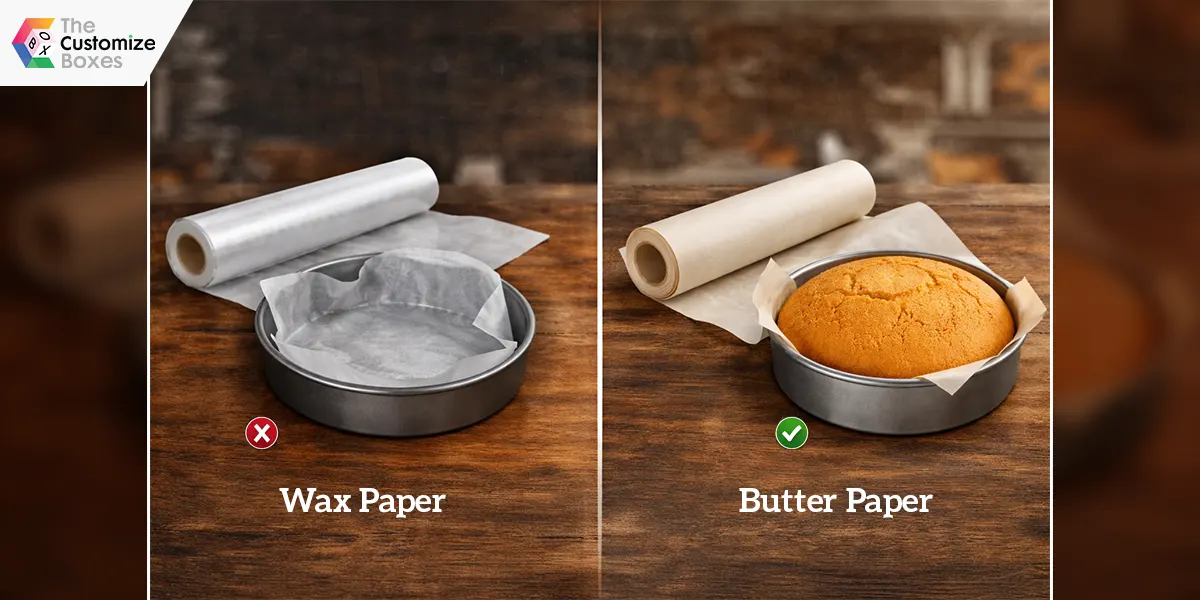
Butter paper is the best choice for baking cakes because it is heat-resistant up to 450°F. And its use ensures a non-stick, smooth release. Wax paper should never be used in the oven for baking, as its paraffin coating can melt at high temperatures.
Wax Paper vs. Butter Paper: Which One is Best for Cookies?
When it comes to baking cookies, butter paper wins because it is not only heat-resistant but also non-stick that prevents burning and safely withstands oven heat. However, wax paper should never be used inside the oven as it can smoke, melt, or catch fire. Use wax paper only for cooling, storing, or separating cookies.
Wax Paper vs. Butter Paper: Which One is Best for Baking?
If you place wax paper in a hot oven, the coating will melt, potentially affecting the taste and texture of your baked goods and creating a fire hazard. Contrarily, the selection of butter paper for baking cakes, cookies, or roasting remains reliable due to its durability and high grease and heat resistance.
Explore Key Uses of Wax Paper
Its moisture-resistant and non-stick coating is also ideal for cleaning, covering food in the microwave, and crafting. Have a look at the most popular benefits of waxed paper:
- Food Storage and Prep: Wrap sandwiches, cheeses, and deli meats to keep them fresh. It is excellent for lining baking sheets or countertops when kneading dough or coating foods in sugar/cocoa.
- Freezing and Separation: Prevents food from sticking together by placing layers of wax paper between burger patties, cookies, or cooked items.
- Microwave Covering: Acts as a cover to prevent splatters while heating food, as it is microwave-safe, unlike many plastics.
- Cleaning and Polishing: Rubbing stainless steel or chrome faucets with wax paper removes smudges and leaves a protective, water-repellent layer.
- Household Maintenance: Can be used to make iron-on transfers, protect drawers from spills, and help drawers slide more smoothly.
- Crafting: Used in making wax-paper-pressed leaves or as a protective surface during glue-intensive, messy projects.
Consider Key Uses of Butter Paper
From preventing sticking, wrapping foods like sandwiches and burgers to maintain freshness, to protecting surfaces during food prep, butter paper has versatile uses such as:
- Baking and Cooking: It is used to line baking trays, cake pans, and cookie sheets to prevent food from sticking. It is suitable for low-heat cooking, but unlike parchment paper, it is not always heat-resistant.
- Food Packaging and Storage: Ideal for wrapping sandwiches, burgers, shawarmas, and pastries for takeaways, ensuring the food remains fresh, and the packaging stays clean. It is also used to store cheese and butter.
- Kitchen Hygiene: Used to cover chopping boards when handling raw meat, fish, or pungent ingredients like garlic and onions to avoid cross-contamination.
- Freezing: Used as a protective layer in freezers to prevent frozen foods (meat, snacks) from sticking together.
- Arts and Crafts: Due to its translucent nature, it is used for tracing, sketching, and transferring designs. It is also suitable for origami.
Wax Paper vs. Butter Paper: Which One Should You Choose?
Wondering what to choose, wax paper vs butter paper. It’s simple: select butter paper if you are going to bake a cake, cookies, or roast chicken. Also, pick butter paper for wrapping hot, oily foods like burgers or fried chicken without making it soggy.
But if your goal is cool food storage, such as wrapping sandwiches, cheese, or meat in a refrigerator, opt for wax paper. You can also use it for lining countertops when rolling out sticky dough, sifting dry ingredients, or catching drips from melted items like chocolate.
If you are still confused about whether to use wax or butter paper, contact The Customize Boxes to make the right choice and ensure mess-free meal preparation.
Butter paper is used mainly for wrapping greasy foods like sandwiches, butter, and cheese to keep them fresh, and for lining surfaces to prevent sticking.
Yes, using parchment paper for baking is highly beneficial. It serves as a non-stick barrier that ensures easy food release, prevents delicate items from breaking, and makes cleanup faster.
Use parchment paper for high-heat cooking, roasting, and baking because it is silicone-coated, non-stick, and heat-resistant. However, you can use greaseproof paper for wrapping, storing, or lining pans for low-temperature, short-duration cooking, as it lacks the non-stick coating and high-heat tolerance of parchment.
Baking paper and parchment paper are generally considered the same product, both featuring a silicone coating for heat-resistant, non-stick, and greaseproof properties, making them interchangeable for baking. The difference is primarily regional: "parchment paper" is commonly used in North America, while "baking paper" is preferred in the UK, Australia, and New Zealand.