
In this guide
When it comes to beautifying tin packaging, embossing and debossing outdo standard printing. These mechanical finishes create a premium, tangible texture that flat printing cannot replicate.
By physically molding tin surfaces, they enhance your brand recognition through touch. By providing sleek, durable designs, both finishes also make your tin boxes stand out on retail shelves.
Since both finishes create distinct aesthetics, their processes, benefits, and branding impact vary. Knowing their differences is important. Because it directly impacts your branding strategy and the physical durability of your tin packaging.
Read this blog to consider embossing vs debossing on custom tin boxes. And decide on the right finish that best fits your product's purpose.
An Overview of Embossing and Debossing
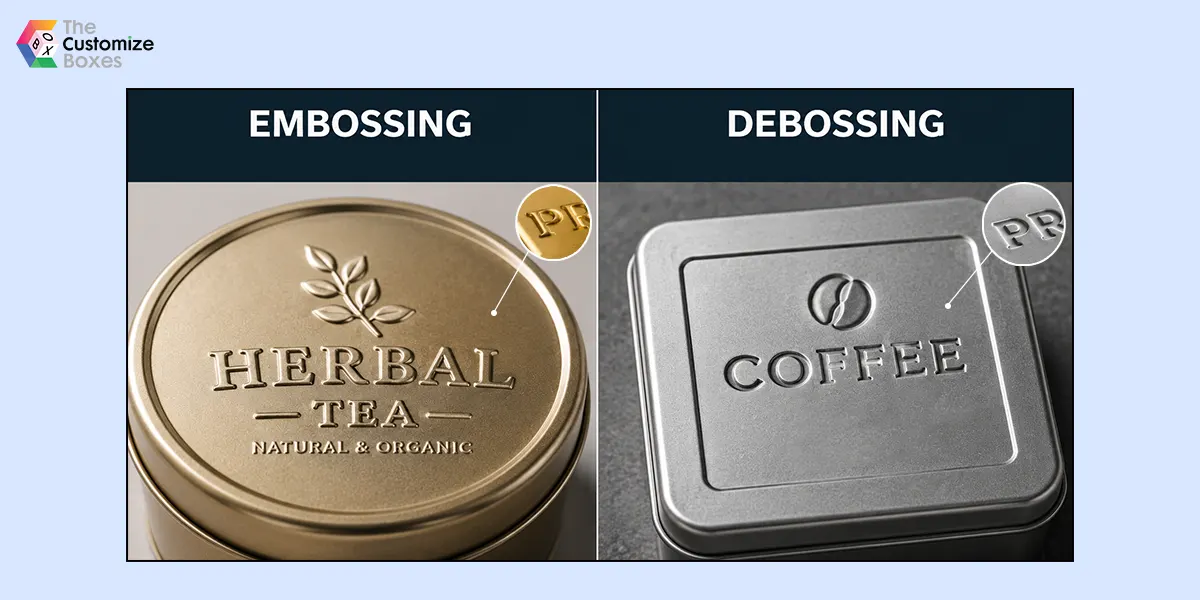
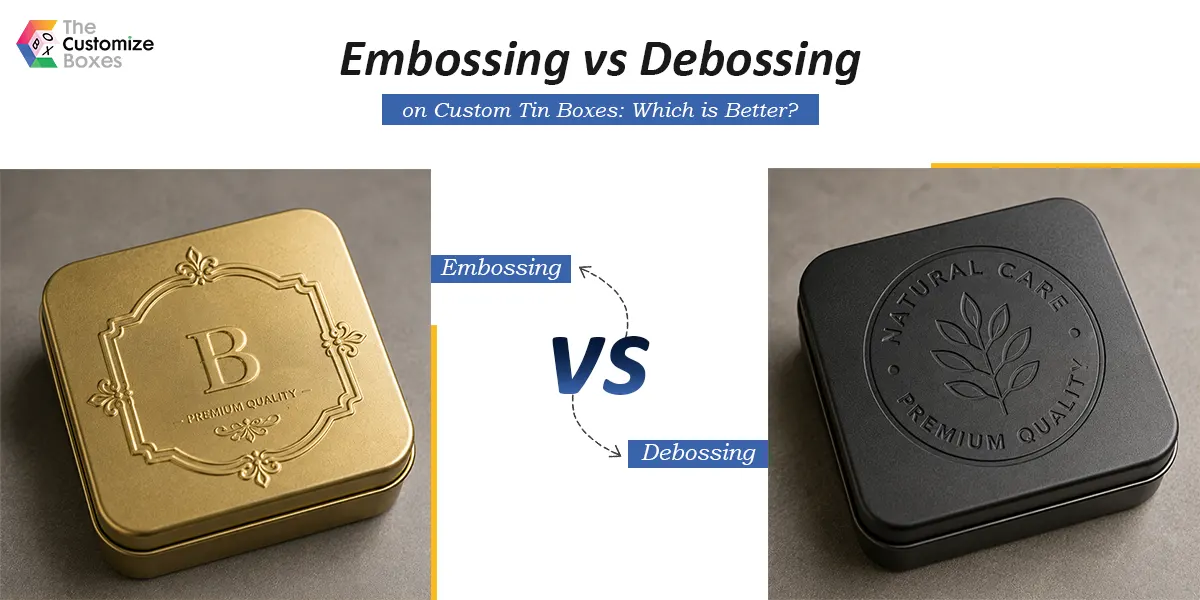
Before choosing embossing vs debossing on custom tin boxes, first understand exactly what they are. They are popular high-end finishing techniques used to add a three-dimensional, tactile quality to materials such as paper, metal, and leather.
The main difference lies in the direction of design, as embossing pushes the image outward. Debossing presses the image inward. Now, have a look at their differentiating properties in tin packaging:
Understand Embossing in Tin Packaging
Embossing refers to a metal-molding technique that creates a 3D, raised design on the surface of a tin can or box. It is pressed between specialized dies. The tin surface elevates specific elements such as brand logos, illustrations, or borders. As a result, consumers can see and feel the raised texture of embossed tin boxes.
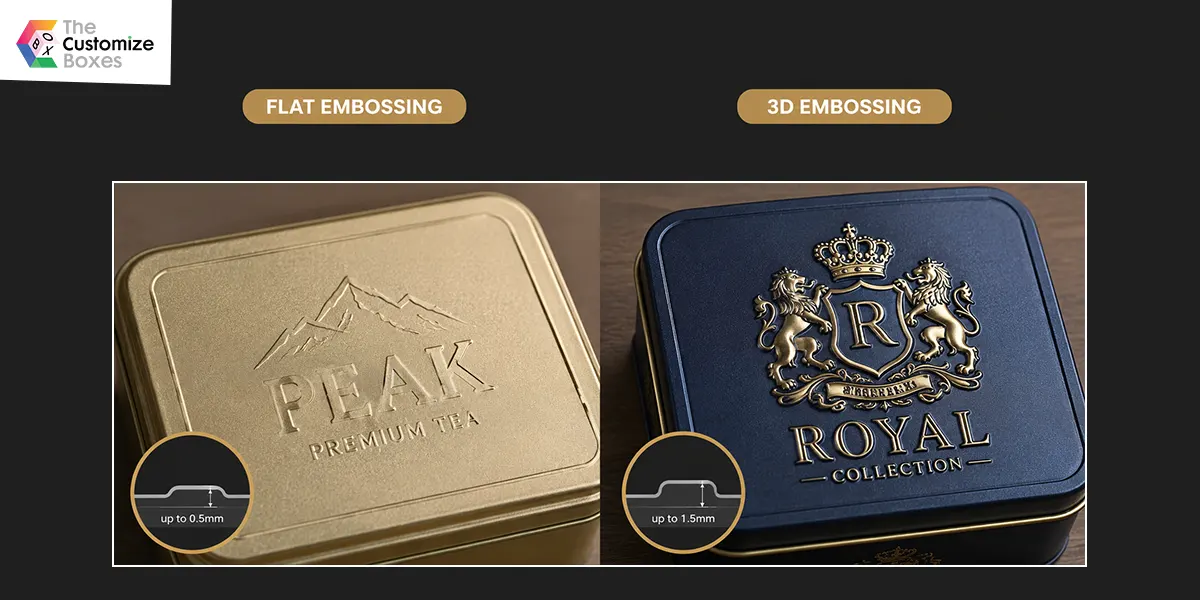
By placing a tinplate between a “male” (raised) and a “female” (recessed) mold and applying high pressure, your molded tin surfaces with tangible ridges and dimensions. They break down into two main types: Flat Embossing and 3D Embossing.
Wondering about their differences? Flat Embossing slightly raises the metal design, usually up to 0.5mm for a subtle, smooth, and high-end feel. While 3D Embossing elevates the metal more prominently up to 1.5mm to create striking contours and shadow effects.
Pros and Cons of Embossing on Custom Tin Boxes
While embossed tin boxes significantly elevate brand perception and create a premium consumer experience, the process involves some limitations, too. Let’s look at their pros and cons in detail:
Pros of Embossed Tin Boxes
- Enhanced Shelf Appeal: The raised texture catches light and creates shadows, instantly drawing the eye. It is highly effective for highlighting logos, brand names, or key design elements on retail displays.
- Exude Premium Feel: Consumers naturally associate tactile packaging with luxury and quality. It is excellent for high-end items like specialty foods, cosmetics, and premium gifts.
- Boost Brand Recall: Adding a physical, 3-dimensional element makes your tin packaging more memorable, encouraging customers to keep and reuse the tin.
Cons of Embossed Tin Boxes
- Higher Tooling Costs: The embossing process needs the creation of custom metal dies (molds), which adds a high upfront cost to your packaging project.
- Longer Lead Times: Because custom dies must be manufactured and tested, the initial production timeline is longer than that of standard, flat-printed tins.
- Design Limitations: Highly intricate or overly detailed designs may not translate well, as the metal stretches during the pressure-forming process.
- Material Constraints: Embossing stretches and stresses the metal. It cannot be easily applied to very thin or brittle materials without risking warping, creasing, or tearing.
Understand Debossing in Tin Packaging
Debossing is a metal-stamping technique that presses a design, text, or logo into the tin surface, creating an indented or sunken effect. Unlike embossing, which pushes the design outward to create a raised surface, debossing pushes the metal inward. As a result, it produces a sleek, subtle, and highly tactile finish.
A custom tin die (mold) is carved with your exact design. Then, heavy machinery presses this die into a metal tin with intense pressure, which forces the design inward. The resulting recessed pattern is called a “blind” deboss or filled with colored inks or metallic foil for a pop of contrast.
These three are basically types of debossed texture, where Blind Debossing leaves a sleek, uncolored impression with no ink or foil. It relies entirely on the shadow and depth of the sunken texture for an elegant, minimalist look.
However, the second type is Foil Debossing, which combines a depression with metallic or colored foil stamping. The sunken area protects the foil from scratching while adding a polished shine.
Last but not least comes Ink-Filled Debossing. It refers to the recessed areas that are filled with custom-colored ink, creating a high contrast between the flat material and the indented design.
Another type is Multi-Level Debossing that uses advanced, sculptured dies with varying depths. This creates dynamic, 3D sunken textures with distinct slopes and layers.
Pros and Cons of Debossing on Custom Tin Boxes
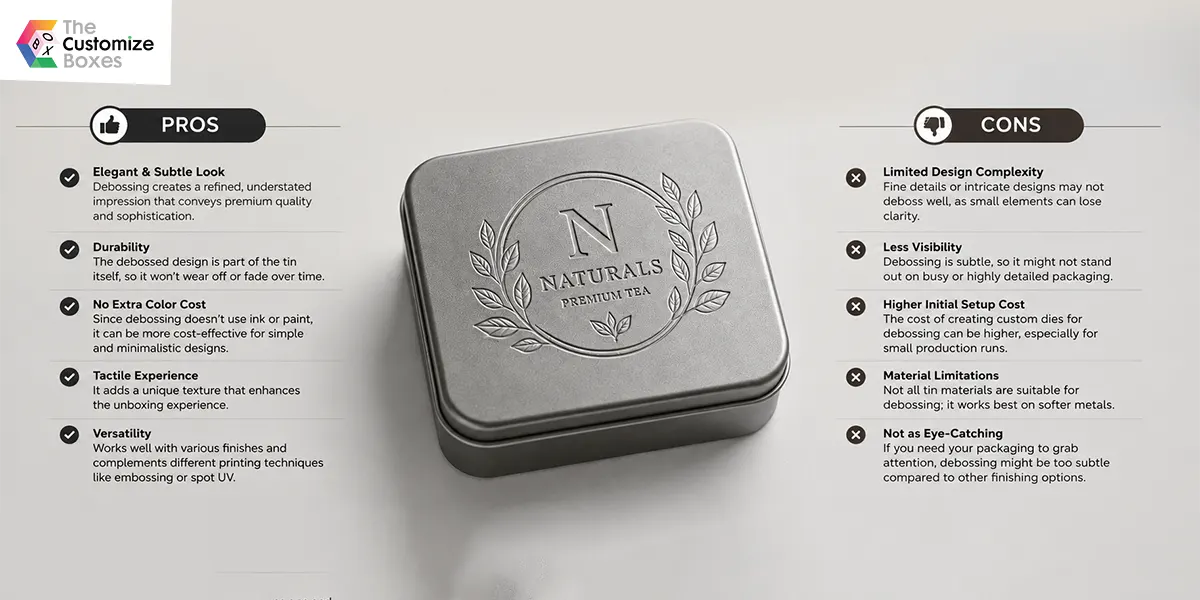
If your highly favored design choice is to convey a “quiet luxury,” then choosing a debossing texture for your tin boxes won’t disappoint you due to their sophisticated and subtle appearance. Apart from this, have a look at their pros and cons as well:
Pros of Debossed Tin Boxes
- Enhance Durability: Because the design sits inward, the recessed areas are highly protected from surface scratches, rubbing, and general wear and tear.
- Reflect Sophisticated Feel: It offers a subtle, premium tactile experience that invites your customers to hold and touch the product.
- Allows Versatility on Metals: Compressing the surface allows it to handle a wider variety of tin metal thicknesses and tempers than raised embossing, without the risk of the material tearing or stretching.
- Convey Clean Yet Professional Look: It creates an understated, minimalist aesthetic perfect for modern branding or secondary details like geometric patterns.
Cons of Debossed Tin Boxes
- Exhibit Lower Visibility: Without the addition of ink or color (known as “blind debossing”), the indented design can be difficult to see under certain lighting conditions.
- Less Tactile Impact: It offers less of a bold, 3D contrast than raising the material (embossing).
- Design Limitations: Small, intricate fonts or very fine details can sometimes get lost or be difficult to read in the recess.
- Tooling Costs: Creating custom metal dies requires upfront tooling investments.
Explore The Differences Between Embossing and Debossing
Since you have explored embossing vs debossing on custom tin boxes in detail, compare their distinctive features to choose the right one based on your needs. Have their comparative overview here:
|
Differences |
Embossing |
Debossing |
|
Protection |
More susceptible to scraping |
More protected against scratches, friction, and daily wear |
|
Durability |
Stretches and pulls the metal slightly, so it generally requires thicker, higher-quality, and more malleable tin to prevent cracking or stress marks |
Compresses the metal, making it suitable for a wider variety of thicknesses and shapes |
|
Cost |
Comparatively higher production costs due to the need for dual dies and more precise pressure control |
Keeps production costs lower as it needs only a single die to press the design inward |
|
Best Uses |
Excellent for decorative gift boxes, candle tins, and primary brand logos |
Ideal for text, serial codes, background patterns, and sleeker designs for tea, coffee, or high-end cosmetics |
Learn How to Emboss and Deboss Tin Boxes
To get embossing or debossing on tin boxes, you can use heavy-duty industrial pressing for manufacturing or perform hands-on metal crafting at home. Look at the step-by-step guide instructions given below:
Manufacturing (Bulk & Production)
For large quantities or thick tinplate, manufacturers use custom metal dies to stamp the metal. They follow these steps:
- Design the Die: Custom male (raised) and female (recessed) metal dies are designed in the exact inverse of your desired design.
- Pressing: The tin sheet is placed between the two dies. The press applies heavy pressure, causing the tinplate to permanently conform to the die shapes.
- Heat and Registration: Dies are frequently heated to make the metal easier to shape, and designs are precisely aligned with your printed graphics for a high-quality finish.
DIY Crafting (At Home)
If you are working with thin, pliable metal such as aluminum foil pans or metal embossing tape, you can easily add relief textures by hand, following these steps:
- Choose Your Material: Use thin, recyclable metals like takeout foil pans or thick, adhesive metal craft tape.
- Transfer the Design: Place your material on a soft surface, like a sketchbook. Trace or sketch your design with a pencil, ballpoint pen, or an embossing stylus.
Emboss and Deboss
- For embossing (raised): Flip the metal over and trace the inside of your drawn lines from the back to push the metal outward.
- For debossing (indented): Trace the outlines directly on the front side, pressing downward.
Tidbit: Use plastic burnishing tools or a Teflon tip to smooth out the metal and refine the edges.
When to Choose Embossing and Debossing for Your Tin Boxes?
Still wondering about choosing embossing vs debossing on custom tin boxes? Go for embossing for a bold, 3D pop-out effect. But if you want a subtle, refined, and minimalist feel. Opt for debossing.
However, you can even use a combination of both, like many other brands. The Customize Boxes specializes in customizing tin boxes with understated elegance (debossing) and high brand visibility and bright environments (embossing).
Frequently asked questions
Is debossing or embossing better?
Neither is objectively better; the best choice relies on your design goals and material. Embossing is better for a bold, luxury look, while debossing is ideal for a subtle yet modern look.
How do you emboss tin?
To emboss tin, trace or draw your design on a soft surface using an embossing stylus or ballpoint pen to create raised impressions.
Is embossing or debossing more expensive?
Embossing is generally more expensive than debossing due to its need for two dies and precise alignment. So debossing is more budget-friendly since it only uses one die.
What thickness of tin for embossing?
For hand embossing, the ideal thickness of tin or soft crafting metal (like pewter or aluminum) is between 0.2 mm and 0.3 mm (36 to 38 gauge).