In this guide
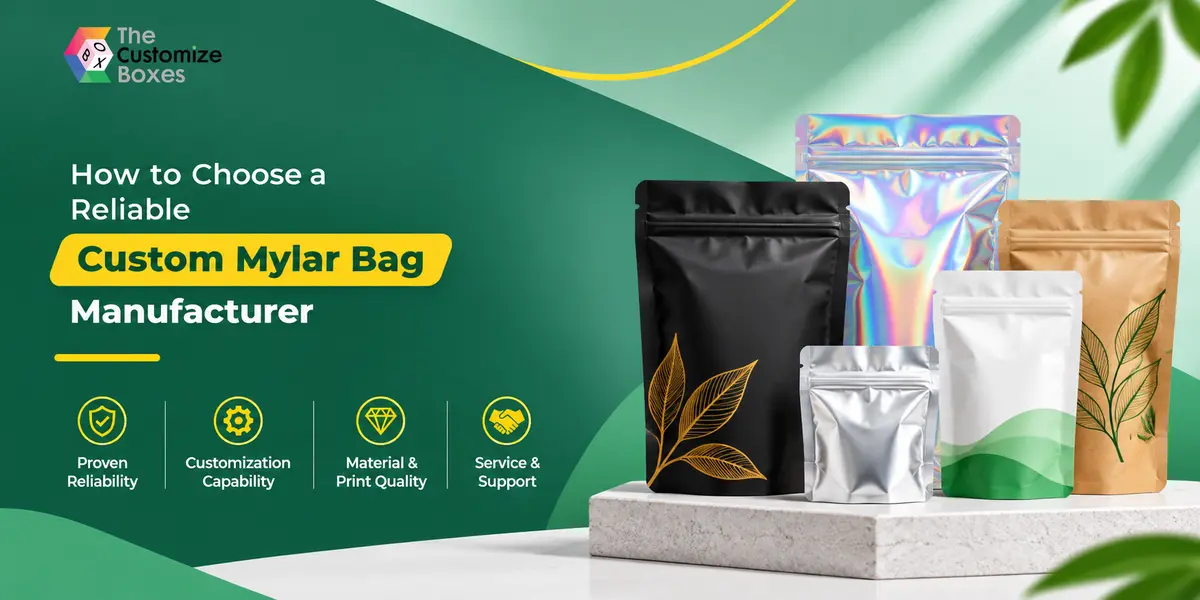
Finding the right custom Mylar bags manufacturer is one of the most critical decisions for any product-based business. The packaging you choose is more than just a container; it is the frontline defense for your product's freshness and the primary visual representation of your brand on retail shelves.
A poor choice in manufacturing partners can lead to delaminated film layers, weak structural seals, leaked contents, or blurry, misaligned branding. Conversely, a reliable manufacturer ensures your inventory remains perfectly preserved while making your product pop visually.
If you are currently evaluating suppliers for custom flexible packaging—or still comparing Mylar Bags vs Stand-Up Pouches vs Kraft Pouches for your product line.
This comprehensive guide outlines the vital technical, operational, and regulatory benchmarks you must audit to make the right choice.
Establish If You Are Dealing with a Factory, Broker, or Print Reseller
Before comparing quotes, confirm who is actually making your pouches. Brokers are not inherently bad, as many provide great account management and minimums, but you need transparency into the supply chain.
Verify the Physical Site:
Ask for the exact production address and request a live video walk-through of the floor.
Audit the Equipment List:
A true mylar bag factory owns its presses (digital or rotogravure), solventless laminators, slitting machines, pouch-making lines, and zipper applicators. If they dodge equipment questions, you are talking to a middleman.
Audit the Material Composition and Barrier Performance
The core purpose of a mylar bag is preservation. True Mylar is a brand name for stretched polyethylene terephthalate (BoPET), but in the packaging industry. It refers to multi-layer barrier pouches. Cheap suppliers often cut corners by using single-layer plastics or inferior laminates that mimic the look of Mylar but lack its protective properties.
Multi-Layer Film Laminations
A high-quality Mylar pouch is never made of a single material. It is a composite sheet engineered from multiple functional layers bonded together. (Learn more about how these films are laminated in our guide on How Mylar Bags Are Made).
Outer layer PET:
Provides structural strength, puncture resistance, and a smooth canvas for high-fidelity printing.
Core Barrier Layer (Aluminum Foil or VMPET):
The defensive wall. Pure aluminium foil offers the highest barrier against oxygen, light, and moisture. Vacuum Metallized PET (VMPET) provides excellent barrier properties at a lower cost with slightly more flexibility.
Inner Sealing Layer LLDPE:
Linear Low-Density Polyethylene acts as the food-safe interior lining that melts uniformly under heat bars to create an airtight, leak-proof seal.
Audit Certifications That Actually Matter
Logos on a website footer prove nothing. Ask for PDF copies of current quality and safety certificates, then check the facility address, scope of work, and expiration date.
Quality Management:
Look for ISO 9001 to ensure consistent batch tracking and defect control.
Food & Hygiene Standards:
For consumables, require BRCGS Packaging Materials, SQF, FSSC 22000, or ISO 22000 certification.
Evaluate Printing Capabilities and Graphic Accuracy
Your packaging serves as a silent salesman. If the printing is dull, pixelated, or misaligned, consumers will subconsciously associate that low quality with your actual product. A reliable manufacturer must display advanced mastery over modern industrial printing techniques.
Digital vs Rotogravure Printing
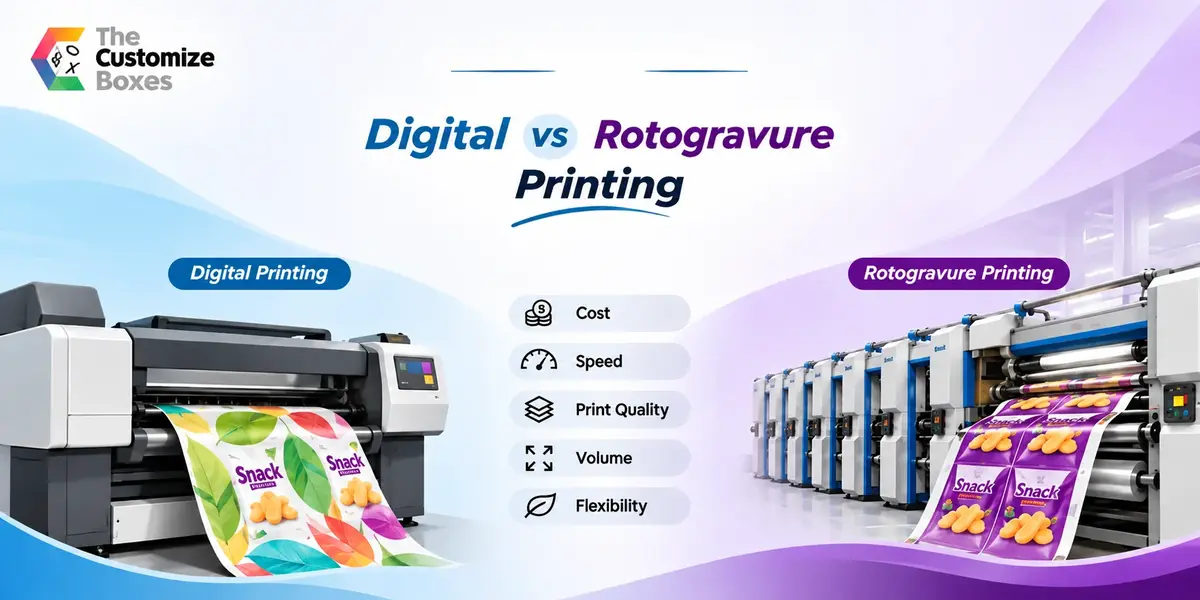
Ensure the manufacturer offers the specific printing method that fits your budget and design complexity:
Digital Printing:
Best for short runs, multiple design variations, and rapid turnarounds. It requires no setup plates, meaning you can test new branding without high upfront costs.
Rotogravure Printing:
The gold standard for massive wholesale volumes. It uses engraved steel cylinders to transfer ink. While the initial setup fee is high, the per-unit cost drops dramatically on large runs, and color depth is unmatched.
White Ink Underbasing
If you choose a metallic, holographic, or natural substrate like Kraft Mylar Bags, ask the manufacturer how they handle white ink. Premium factories apply a heavy white ink primer layer beneath your colored graphics.
Without this underbase, CMYK inks printed directly onto shiny metallic film will look translucent, muddy, or metallic themselves, ruining your brand assets.
Insist on Certified Food Safety and Regulatory Compliance
If your business operates in the food, beverage, medical, or legal cannabis industries, your packaging compliance is a non-negotiable legal requirement. You cannot afford to risk consumer health or face costly regulatory recalls due to contamination.
Food-Grade Certifications
Verify that the manufacturer operates a clean room facility and uses raw materials that are completely FDA-compliant, BPA-free, and food-grade. Ask for documentation such as ISO 22000 or clean-room compliance certs.
Verify Food-Contact & Toxics Compliance
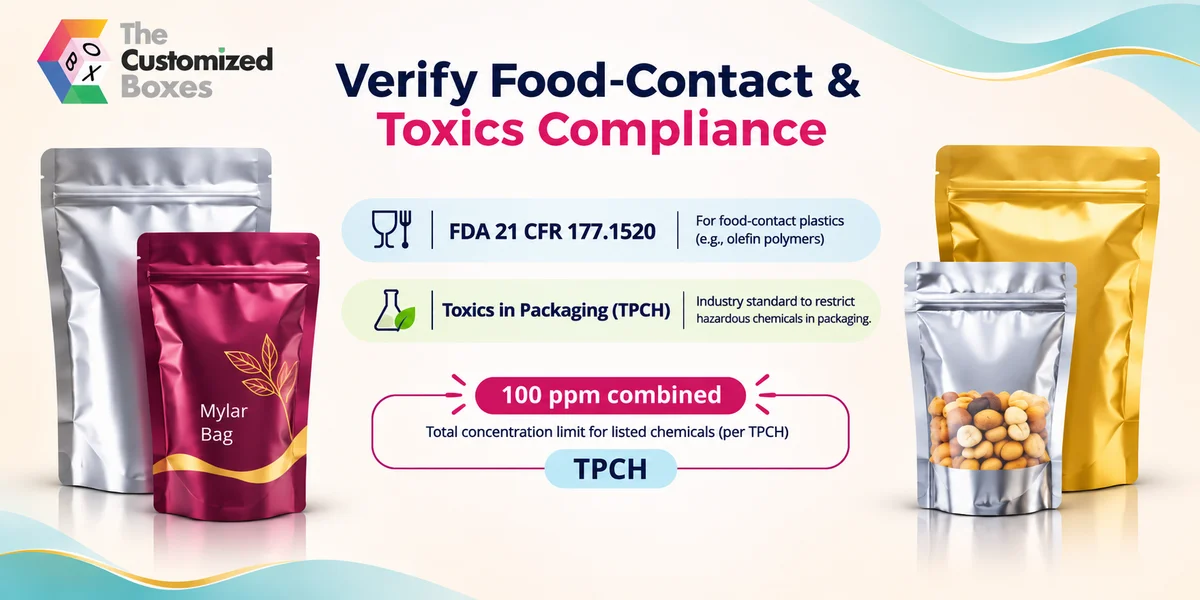
If a supplier claims their bags are FDA-approved, treat it as a red flag; the FDA does not approve packaging. Instead, raw materials must meet federal safety regulations.
FDA 21 CFR 177.1520:
Ensure the inner food-contact sealant layer (usually LLDPE or CPP) complies with this standard. Request a Letter of Guarantee or migration test report.
Toxics in Packaging (TPCH):
Many US states restrict lead, cadmium, mercury, and hexavalent chromium in packaging and inks to 100 ppm combined. Ask for a signed TPCH compliance declaration.
Validate Child-Resistant (CR) Claims
If you package pharmaceuticals, supplements, or regulated botanicals in Child-Resistant Mylar Bags. A legitimate CR pouch requires a third-party laboratory test report certified to 16 CFR 1700.20 and ASTM D3475 for that exact film structure, pouch size, and zipper profile. Ask for the full report, testing lab name, and certification date. See our CR Mylar Bag Compliance guide for full testing rules.
How to Verify Film Specs and Production Quality
|
What to check |
What a weak supplier does |
What you should ask for |
|
Numbers, Not Adjectives |
Throws around buzzwords like "heavy-duty," "ultra-thick," or "high-barrier" without any lab proof to back them up |
Exact film thickness in microns or mil, plus lab test results for OTR (ASTM D3985), WVTR (ASTM F1249), and seal strength (ASTM F88). If they cannot hand over these numbers, they haven't tested their material. (Read our Mylar Layers & Barrier Guide to see what numbers to target.) |
|
Sample vs. Production Quality |
Sends you a hand-cut, manually glued mockup that looks far cleaner than what their high-speed machines actually produce. |
A pre-production sample pulled straight off the converting line. Sign off on it as your "golden sample," so your full bulk run is judged against that exact standard. |
Analyze Production Flexibility, MOQ, and Hidden Fees
Every manufacturing partnership comes down to financial and logistical compatibility. You need a supplier whose production scale matches your current operational size while maintaining room to scale up. Especially if you plan to expand into specialty formats like liquid-ready Spout Pouches. For a full breakdown of cylinder fees, unit tiers, and freight expenses, read our mylar bags cost guide.)
Minimum Order Quantities (MOQs)
Be transparent about your volume requirements. Domestic digital printers often accept low MOQs starting at 500 to 1,000 bags per design. Overseas rotogravure factories often require minimums of 5,000 to 10,000 units per size because setting up massive machinery is costly.
Test Structural Samples Before Bulk Production
Never order thousands of custom mylar bags wholesale based entirely on digital mockups or 3D renderings. A reputable manufacturer will always offer physical sample options.
Pre-Production Prototypes
Request a material sample pack to feel the thickness, test the zipper track, and try out the tear notches. If possible, pay for a printed press proof of your specific design. Fill the sample bag with your actual product, seal it using your facility's heat sealer, and conduct real-world testing:
- Does the bag stand upright properly when filled?
- Do the corners poke holes in outer transit boxes?
- Does the oil or moisture from your product migrate through the inner seal over a two-week period?
Frequently asked questions
What is the standard minimum order quantity for custom Mylar bags?
Digital production starts around 1000 units, while rotogravure runs require 5,000 to 10,000 bags.
How do I verify if a manufacturer's Mylar bags are food-safe?
Request official documentation proving their raw materials are FDA-compliant, BPA-free, and food-grade certified.
What film thickness is best recommended for long-term food storage?
A thickness between 5 mil and 7 mil per wall provides the necessary barrier protection.
Do custom Mylar bag orders involve upfront plate or cylinder setup fees?
Rotogravure printing requires upfront fees for engraved steel cylinders, while digital printing completely eliminates plate costs.
How do I know if a Mylar bag supplier is a real manufacturer?
Ask for their physical factory address, an equipment list, and a live video walk-through of their printing and pouch-converting lines.
What certifications should a Mylar bag manufacturer have?
Look for ISO 9001 for quality control alongside food-safety certifications like BRCGS, SQF, FSSC 22000, or ISO 22000, and always verify their expiry dates.
Are Mylar bags FDA approved?
No, the FDA does not approve finished packaging; instead, the inner food-contact film must comply with FDA 21 CFR 177.1520 regulations.
What documents should I ask for before ordering food-grade Mylar bags?
Request an FDA 21 CFR 177.1520 compliance letter, a TPCH heavy-metals declaration, a migration test report, and a technical data sheet with OTR, WVTR, and seal strength numbers.
How do I check a supplier’s child-resistant claim?
Ask for a third-party lab report certified to 16 CFR 1700.20 and ASTM D3475 that matches your exact bag dimensions and zipper profile.
What is a pre-production sample and why does it matter?
It is a physical prototype of your custom pouch made before bulk production, letting you test print accuracy, heat-seal strength, and product fit first.
