
In this guide
Brands who are producing high-quality products and not caring to protect or preserve their products for the future use, cannot perform ideal functionality for even greatest brands. Explore how you can maximize the visibility of your products, enhance the presentation of your brand, and create your brand distinction with the quality of custom mylar bags.
This guide will help you understand the science behind custom mylar bags and help you to get maximum benefits for your product packaging.
Understanding the Mylar Bags Concept
Packaging, rigid or flexible, is excellent when it performs ideal functionality in protecting, preserving, presenting, and transporting products. However, with the flexible packaging, the quality of packaging for the food packaging is more concerned across industries. The increased usage of mylar materials for flexible packaging has completely and drastically changed the product preservation game across industries.
Custom mylar bags are a great solution for the short-term, medium-term, and long-term storage and preservation of food items, as they are not produced with just a shiny plastic; they are highly engineered shields produced with precise scientific layers. This guide helps you dive deep into the construction, using multi-layer technology, and defensive capabilities of modern custom packaging.
Let’s explore custom mylar bags from understanding through the manufacturing process in detail.
Significance of Custom Mylar Bags
Mylar bags, unlike simple plastic or paper bags, are highly durable, highly protective, and immensely preservative packaging solutions, especially for food packaging and long-term storage of several products. The following are certain significant factors that will help you grasp the real worth of the packaging solution:
-
Oxygen and Moisture Barrier
With high-quality barrier properties, laminated aluminum and polyester layers of the custom mylar bags can block air and humidity, preventing oxidation and mold growth.
-
Light and UV Protection
Opaque or metallic films block ultraviolet light and help preserve the potency, flavor, and nutrients of a variety of food items, like coffee, herbs, and snacks.
-
Puncture and Tear Resistance
Multiple layers of heavy-duty materials resist rips, punctures, and rough handling during transportation, organization, and retail display.
-
Lightweight and Cost-Effective
In comparison with glass or rigid containers, Mylar bags provide reduced shipping weight and store flat to save warehouse space and storage costs.
-
High-Definition Custom Printing for Branding
Mylar bags support vibrant digital and offset graphics with matte, gloss, soft-touch, or foil finishes to stand out in the highly competitive market.
Explore the Types of Mylar Bags
The following are some of the most common and popular Mylar bag styles that provide a great choice for the protection, preservation, presentation, and display of your products. They also offer amazing cost-efficient packaging solutions during storage, transportation, and presentation on the retail counters.
- Stand-Up Pouches (SUPs): Stand-up mylar pouches are made to strongly present the products on the retail shelves, save space with the bottom gusset, and provide convenience in storage and use of the products.
- Flat Pillow Pouches: Simple, two-sided sealed bags with no bottom base or side folds are ideal choices for flat items, seeds, or single-use portions.
- Side-Gusseted Bags: Contain inward-folding folds on both sides, increase the packaging capacity that expands when filled, commonly used for coffee, pet food, and many more items.
- Child-Resistant (CR) Bags: Built with a specialized locking mechanism or push-and-turn zipper lock required for cannabis, pharmaceuticals, chemicals, and other desired products.
Deconstructing the Anatomy: The Tri-Layer Shield
Mylar bags are excellent packaging choices for many reasons; some of the great and unbeatable factors include their highly durable construction using materials with unbeatable strength and quality. The following materials that form the three base layers can explain the strength of Mylar bag packaging for various industrial product packaging solutions:
-
The Outer Shell (Polyester Film / PET)
We can closely understand how the outer shell layer is produced and how it can play a highly significant role in the manufacturing process of the Mylar bags. The process for the manufacturing of the Mylar bags begins with PET resin pellets and their extrusion at a high temperature. The molten polymers are extruded onto a chill roll and stretched. During the process, the tensile strength dramatically increases, enhancing clarity and thermal stability.
The outer shell of the mylar bags prevents the bags from puncturing, tearing, or stretching, and helps maintain the shape of the bags. It acts as an environmental shield against the outer elements like moisture and dust. Branding is highly dependent on the outer layer of the mylar bags with quality printing and finishing techniques.
-
The Core Shield (Aluminum Foil / Metallized Core)
In the middle of custom mylar bags, there lies the inner or core shield, a vital barrier and highly protective layer made from aluminum foil or a metallized film. It handles branding and visual graphics, and is highly responsible for the actual preservation. This layer provides an excellent opportunity to protect perishable or sensitive goods for years and blocks light, moisture, oxygen, and odors.
-
The Inner Sealant (Polyethylene / PE)
Polyethylene (PE) serves as the one of the most important inner sealant layers of a custom Mylar bag, that provides the fundamental closing mechanism, structural integrity, and product safety. The outer layer, produced with polyester (BoPET), provides a printable surface, and the middle aluminum layer blocks external elements, but it is the inner PE layer that allows the package to be heat-sealed airtight.
-
The Core Functions of the PE Inner Sealant
The inner sealant layers have a distinctive role in the construction of mylar bags, as the polyethylene lining is engineered to do a great job within a multi-layer flexible laminate structure. They enable heat sealing, have direct product contact, and offer moisture and puncture resistance. One of the most sensitive roles is highly based on this inner sealant layer, which absorbs physical impacts, preventing sharp product edges from fracturing the middle foil layer.
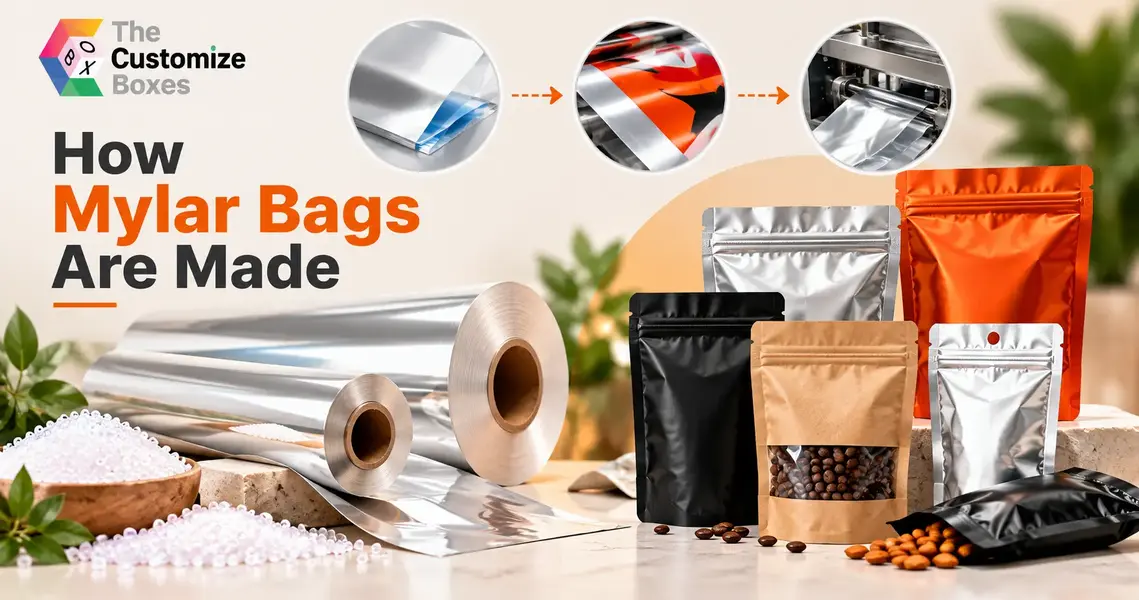
Step-by-Step Explanation: How Custom Mylar Bags Are Manufactured
Custom mylar bags are highly desired flexible and heavy-duty, versatile packaging solutions for unlimited product categories across a wide range of industries. The following are the major steps required to produce high-end custom mylar bags for your products:
-
Phase 1: Tailored Design and Art Placement
Customization options include translating branding, choosing typography, and opting for the required product details on a specialized template.
-
Phase 2: High-Definition Printing
High-quality printing options can boost your brand image by transferring graphics onto the base film layer using top-tier print techniques, like flexographic, digital, or rotogravure printing can help you effectively showcase your brand identity, boost your products visibility and create a reliable customer base.
-
Phase 3: The Lamination Fusion
Bond the PET, Aluminum, and PE films together to create a highly strong, protective, and reliable packaging material using industrial adhesives under precise temperature settings.
-
Phase 4: Slitting and Form Conversion
At this final stage of manufacturing the custom mylar bags for your products, you need to cut the massive rolls of layered film down to size and heat-weld them into specific styles. Some popular and widely chosen styles include stand-up pouches, flat bottom bags, or side-gusset bags for increased packaging capacity.
Uses for Different Industries
Mylar bags, though, are common in various industries; however, some more common and popular industries that use these bags include the following:
- Food & Snacks: Mylar bags are a great packaging solution that preserves coffee, tea, dried fruits, and confectionery by blocking air and moisture.
- Wellness & Supplements: An ideal packaging that protects sensitive powders, vitamins, and capsules from humidity degradation.
- CBD & Cannabis: Prevent unwanted connection to kids by ensuring the highly required specific features, which includes child-resistance, smell-proof, and compliant retail packaging.
- Cosmetics & Skincare: Cosmetics and skincare products are common product lines that prefer custom mylar bags to package and store single-use sample kits, sheet masks, and powders.
- Agriculture & Gardening: This industry mostly uses custom mylar packaging to keep crop and flower seeds viable for years by shutting out light and water vapor.
- Pet Care: Keep animal kibble, treats, and specialized feeds fresh and pest-free by choosing the quality mylar bags personalized with your branding details to stand out.
- Jewelry & Gifts: Select high-quality mylar bags to prevent precious metals and silver, and other metallic gift items from tarnishing or oxidizing.
Summarizing the Whole Discussion!
Be bold to choose custom mylar bags for extra protection, easy organization, and saving your costs and investment without compromising the charm and attraction of your product packaging. Create a hyper-persuasive balance of quality raw materials, barrier science, and manufacturing processes that result in the ultimate packaging solution.
Invest in custom-engineered mylar bags, ensure product integrity, and elevate brand value with your smart and diligent decision on custom packaging.
Frequently asked questions
How are the layers combined?
Feed the unwinding rolls into a multi-station lamination machine, apply adhesive between the layers, and cure and press the layers using the pressure rollers that squeeze the layers tightly to eliminate bubbles, and finally convert and slit into smaller rolls or panels, folded or heat-welded for the ideal strength of the mylar films.
What thickness should I choose?
The thickness highly depends on the personalized requirements of the product's nature, size, and weight. However, usually 2 – 3 mil thickness is considered excellent for short-term or lightweight items, 3.5 – 5 mil for standard retail and medium-term dry goods, and 5.5 – 7+ mil for long-term survival storage, bulk food, or sharp-edged items.
Do I need an oxygen absorber?
For dry food in long-term storage, usually between 1 – 25+ years, like grains or beans, oxygen absorbers are usually required. However, they are unnecessary for short-term use, non-food items, or products like cannabis and similar items that prefer humidity packs instead.
