
In this guide
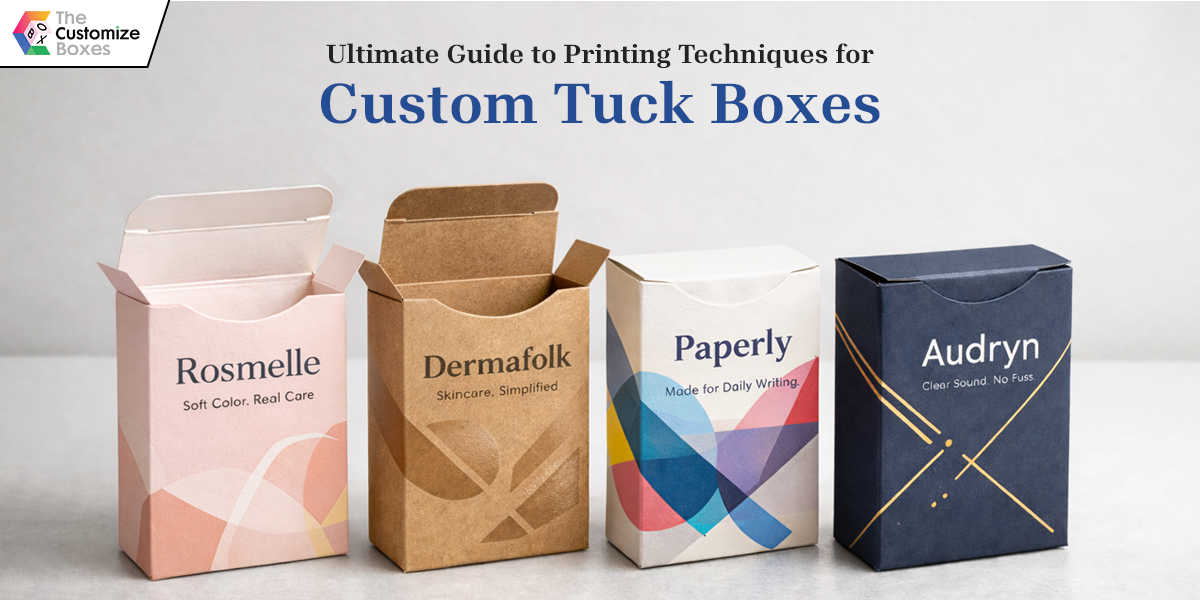
Tuck boxes come with endless styles featuring a full-fledged solution to diversified packaging needs. From its design aesthetics to its opening/closing mechanism, each of the elements of the tuck box offers maximum convenience to users. But it’s incomplete without printing.
Curious about what techniques are deployed for it? Here in this blog, we’ll explore them in detail and find out how printing can make or break the packaging.
Four Reliable Printing Techniques for Tuck Boxes
Offset Printing
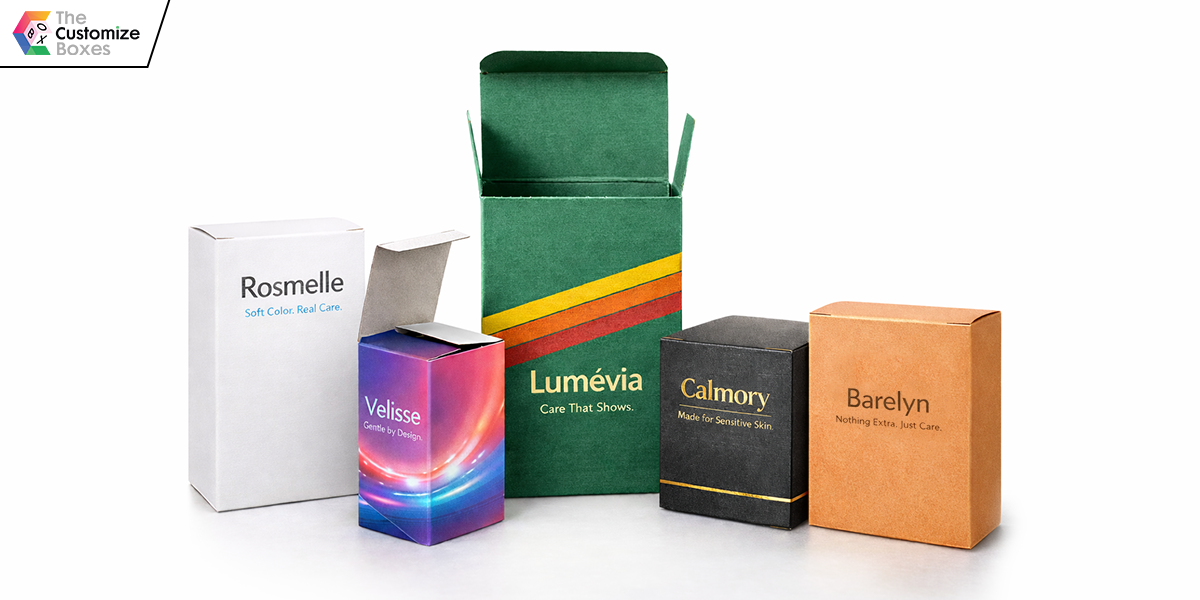
First of all, the most common technique for customized tuck boxes is the offset printing that benefits from rubber metal plates, transferring ink onto the surface of the material. Since it’s a sophisticated process, the output is flawless and doesn't produce any kind of smudges or washed-out prints.
Also known as lithography, its second name is “offset lithography,” which is widely used to refer to the same technique in the packaging industry.
Digital Printing
Secondly, the digital printing method is ideal for custom packaging printing demands. If we compare it with the offset technique, it’s much more affordable, and many companies rely on it to produce color-accurate outputs.
The whole setup of this technique relies on the latest integrated systems, which are capable of delivering fast and efficient results over traditional means. For instance, inkjet or laser printing are the common types of this technique — both are great for tuck boxes tailored printing requirements featuring inch-perfect accuracy of virtual design onto the actual material.
Screen Printing
Beyond completely electronic printing techniques, screen printing is a blend of some manual efforts to get exceptional quality. That’s why, when it comes to producing vibrant designs or patterns on the tuck box's surface, screen printing stands out as the top choice.
Meanwhile, it’s a standard time-taking technique, but only if 2-3 colors are involved. Once more colors are present, it takes more time to develop the graphics because the turnaround time is affected by drying and changing mesh frames that transfer the thin layer of ink on the paper.
Foil Stamping
Foil stamping and foil finishing. If you get confused by both terms, it’s okay! Both sound similar and may have some points in common, but there’s a difference between them. For instance, foil stamping refers to a part of the whole printing process where foil (silver, gold, or metallic) is stamped onto the surface of the box that already has some graphics, also developed by printing.
Whereas, in foil finishing, the whole or partial surface of the box features the finish rather than a dedicated area. So, this varies from the custom printing or finishing needs.
What’s Printed & What’s Not!
Whatever, inside or outside of the box’s surface, it is printable. But do you know what makes both sides distinctive? Below is a simple explanation that’ll be helpful, and you may get some inspiration from it for your packaging.
-
Exterior/Outer Surface
For the outer area, the bespoke tuck boxes are printed with logos, graphics, and all other branding elements. Since it’s something that gets noticed from production to consumption, making it the best version of it is the top priority for packaging companies.
Although the color-catchy and trendy prints attract a lot. Sometimes, minimalistic and basic prints also deliver uniqueness, depending on the branding needs.
-
Interior of the Box
For the majority of boxes, the interior remains blank. Yet, the one that demands to showcase some content is addressed with a single color or minimal color schemes. The objective is to display or convey important information to comply with the regulations or inform the user about the product’s specific details.
Finish Coatings After Printing for Improved Appeal
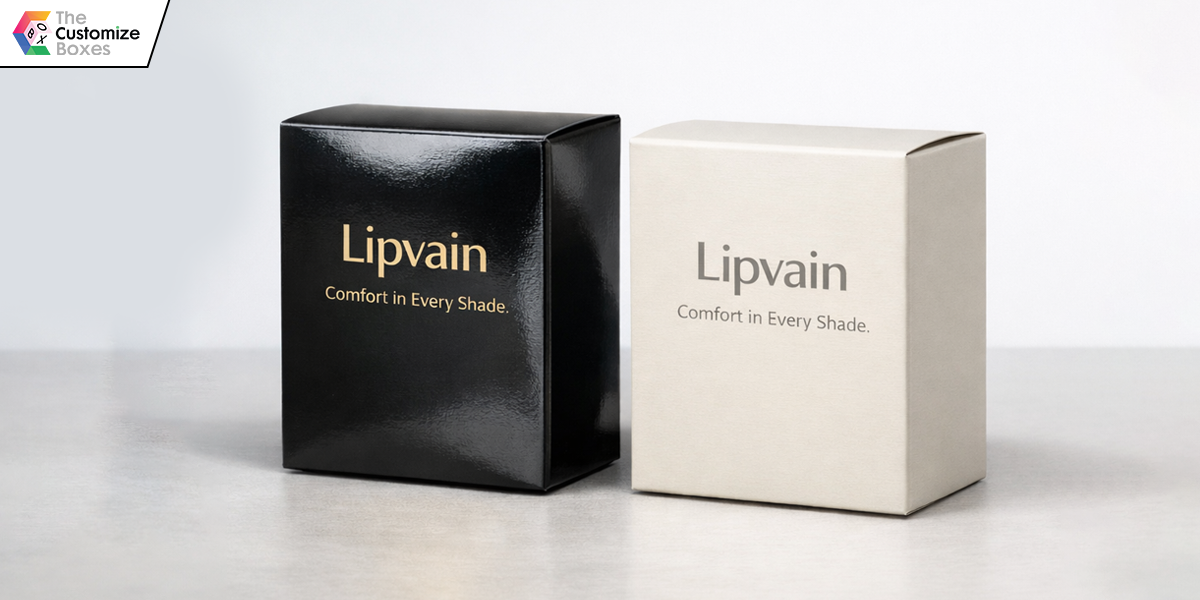
The job of making the ideal tuck boxes doesn’t end after printing. Indeed. It’s further upgraded with exquisite finishes that determine how the box will feel once grabbed. Yet, the finish of the box depends upon the aesthetic needs.
For instance, to achieve a smooth and glossy feel, laminated finishes fit perfectly. For a subtle and light-absorbing surface, a matte finish is ideal.
The Print Line
We hope you now understand the printing techniques used to overcome the tuck box packaging concerns. Each of the methods offers a unique result that the other may lack or be less efficient in. But the best one is picked as per the need of the hour.
However, managing and overseeing all of the technical aspects related to the customization of packaging is a hectic task. Here, partnering with an experienced packaging company can help your business thrive. Understanding all of these concerns, The Customize Boxes is your top-notch vendor offering you tailored tuck boxes solutions at competitive costs.
You can connect with us today by calling (972)-590-8867 or filling out the inquiry form to request a 3D mockup or a quote for free!
Frequently asked questions
Do tuck boxes first print or assemble?
The printing is done initially to develop the graphics on the paper of the box. After that, the box is turned and creased according to its dimensions to ease the assembly. This makes crafting the tuck box a hassle-free task, which may not be achieved if a random process is followed.
Which printing technique is best for tuck boxes?
There are no good or bad methods for printing the tuck boxes. Each has its own significance and caters to the custom packaging requirements. For instance, Offset and Digital printing methods are compatible for most tuck box materials.
Do tuck boxes lose their printing?
A tuck box may lose the integrity of the prints. But there are multiple factors that can cause this issue on the box’s surface, such as due to the usage of poor-quality inks, improper printing, or exposure to harsh light or environments.
What color systems are used in tuck box printing?
The industry-standard color schemes, including CMYK (Cyan, Magenta, Yellow, Black) and PMS (Pantone Matching System), are used to cater to all printing needs. Since these systems cover almost every color code in which the virtual design is developed, it’s a practical option for tuck printing demands.