
In this guide
Brands today are more conscious about the packaging of their products to get maximum benefits from their available resources. You should know the real worth of custom packaging tailored to your needs and requirements, and the shortcomings of traditional and ready-to-use packaging.
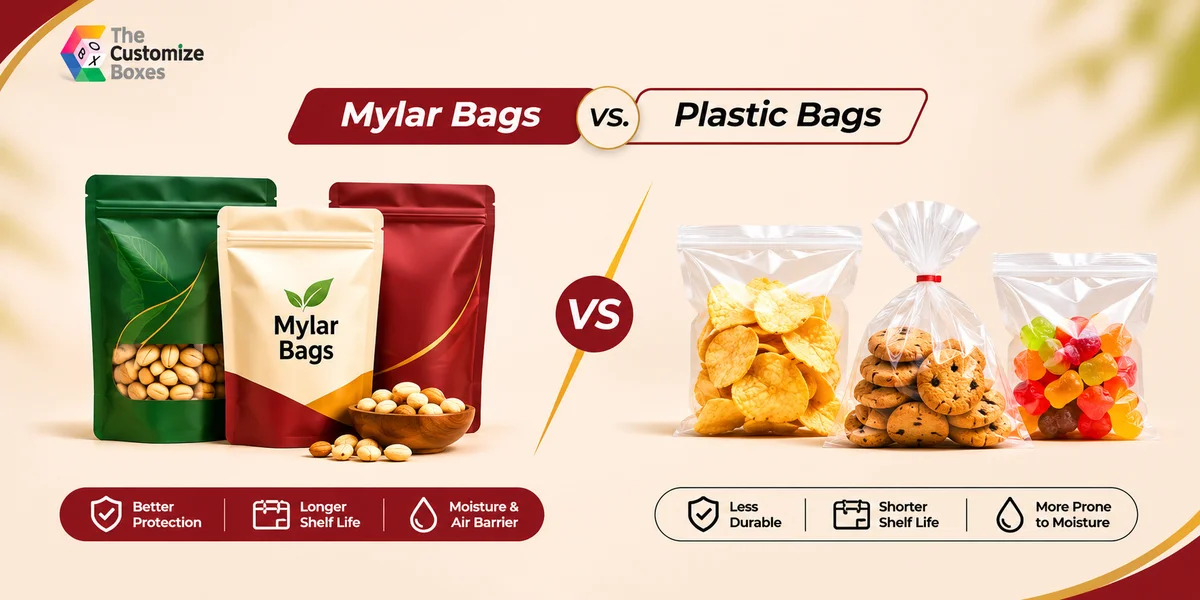
Mylar and plastic, though both are flexible, lightweight, and versatile packaging options, have their own significance. In this blog, we will highlight and explore how they differ from each other, and which is the best choice for your business.
Let’s explore it in detail:
Quick Understanding of Mylar Bags Vs Plastic Bags
Before you dive into the details of which is better for your products, it is better to learn what customized mylar bags are and what are plastic bags.
-
What are Mylar Bags?
A mylar bag is produced with highly durable PET polyester film with an aluminum layer. These combined materials offer high barrier protection to the products against moisture, light, and oxygen.
-
What are Standard Plastic Bags?
Custom Poly Bags are manufactured with polyethylene [PE] or polypropylene [PP] films. They are designed for flexibility and short-term usage.
Both have a significant value for the business, as Mylar wins on long-term preservation and barrier strength, while standard plastic provides greater attraction on short-term affordability and daily convenience.
Breaking Down the Materials (What Are They Actually Made Of?)
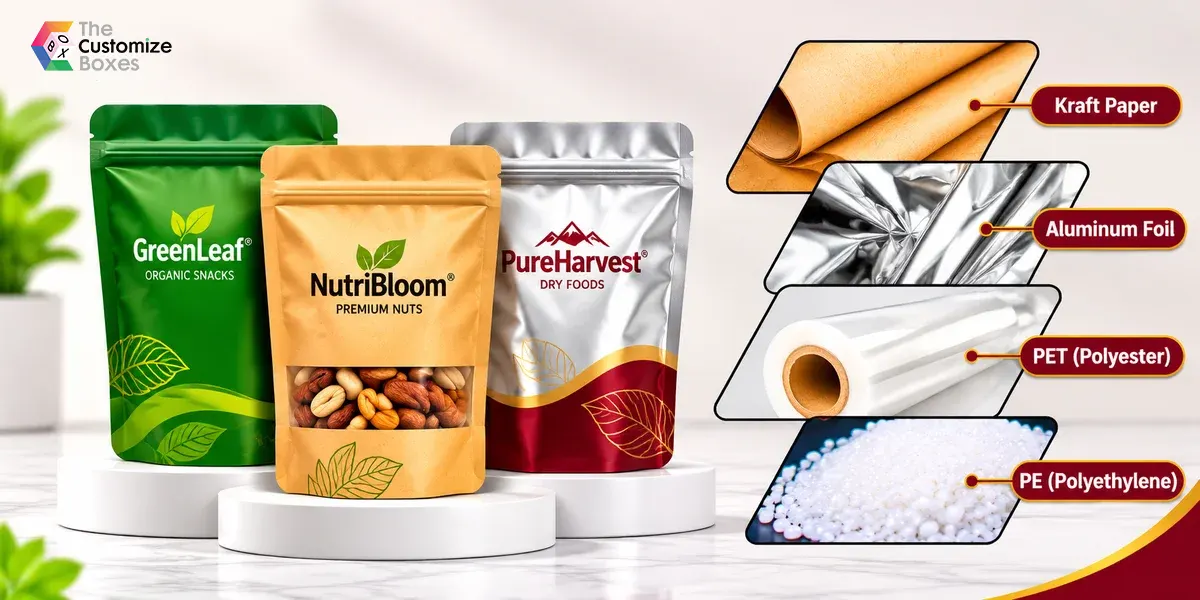
We can comprehend both of these packaging options by dividing them in detail. Let’s explore their construction and material options:
-
Mylar Bags Anatomy
If you want to know how custom mylar bags are made, Mylar bags are produced with a combination of different packaging materials, like PET (Polyethylene Terephthalate), aluminum coating, and a PE food-grade inner layer. In fact, mylar is produced with a specialized form of plastic film infused with metallized shielding for greater strength and durability.
-
Plastic Bags Anatomy
Plastic, on the other hand, is produced with a single of multi-layer plastic packaging materials such as (LDPE, HDPE) or polypropylene (PP). It lacks strength and durability as compared to the mylar material.
-
Point to Remember
Though both of the two packaging materials are plastic-based, it is Mylar that adds a heavy-duty metallic barrier for the increased protection of the contents.
Head-to-Head Comparison: Mylar vs. Plastic
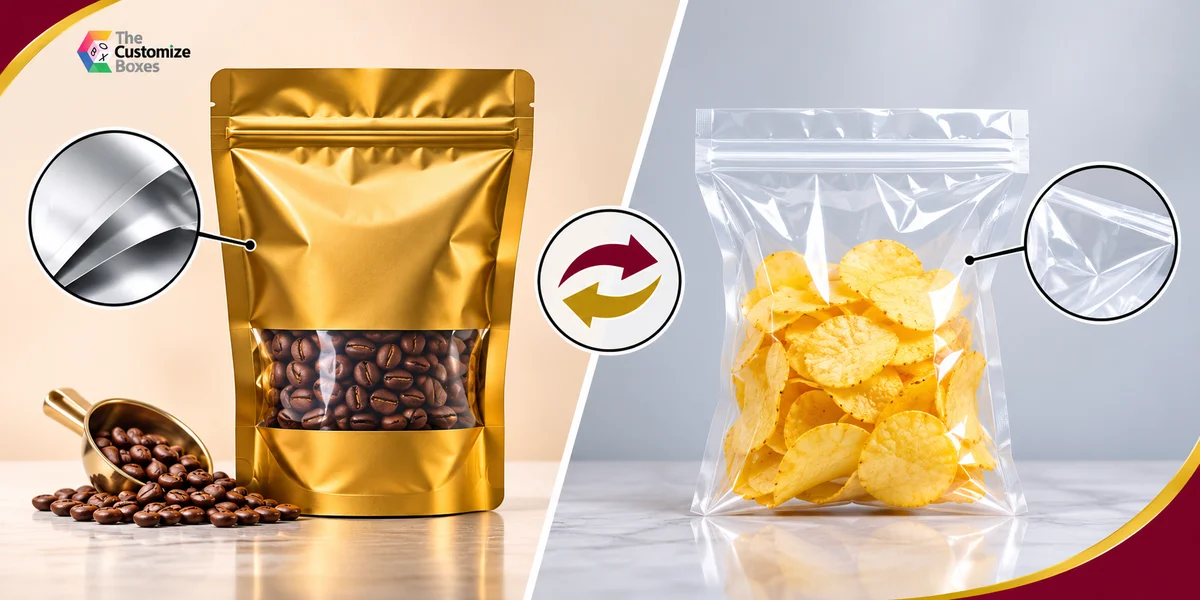
For a quick and easy view to understand Mylar and plastic, it seems better to craft a simple and short table for their comparative analysis. Here is the comparative table:
A Comprehensive Comparison Table of Mylar and Plastic
|
Features |
Mylar Bags |
Plastic Bags |
|
Oxygen and Light Barrier |
Near-impenetrable, blocks light completely |
Porous and permeable, and hence lets light and oxygen pass through over time |
|
Shelf Life |
Almost 20 to 30 years with the use of oxygen absorbers |
Nearly 6 to 12 months and best for short-term use |
|
Puncture and Tear Resistance |
High tensile strength and durability for greater protection |
Moderate to low, prone to stretching or puncturing |
|
Cost-efficiency |
More expensive upfront |
Budget-friendly and economical |
|
Smell and Odor Proofing |
Exceptional and hence ideal for coffee, herbs, cannabis |
Moderate to poor, and odors can escape or penetrate |
|
Child-proof locks can be added to these bags |
Only a few child-resistant locks are possible |
When to Choose Mylar Bags?
Mylar bags are a highly durable, protective, and barrier custom packaging solution for a variety of products. It offers the best packaging solution to a variety of products such as grains, beans, freeze-dried meals, etc., for long-term storage.
It is an ideal packaging choice for specialty goods that require zero-moisture and zero-light exposure, like coffee, spices, pharmaceuticals, and cannabis. One of the greatest features of these bags is their child-resistant or smell-proof retail packaging solution.
-
The Secret Sauce
You can protect, preserve, and store your products in the long with the use of oxygen absorbers, they will help you keep the content fresh for decades.
When to Choose Standard Plastic Bags?
Plastic bags, one of the most common traditional packaging choices, is a highly cost-effective packaging solution for a wide range of products, especially produced for the short term storage of the food items. Some popular items that are mostly chosen to be packaged in these bags include snacks, freezer items, and other short-term daily-use items.
Plastic bags are the perfect packaging solution for high-turnover retail goods where customers see and consume the product quickly. It is a highly cost-sensitive bulk packaging choice where extreme protection from external barriers is not required.
-
The Considerable Point
Plastic packaging is a lightweight, transparent packaging choice for product display, and a widely compatible packaging choice with standard heat-sealers or zippers.
The Sustainability and Eco-Angle
Both packaging materials are not sustainable and eco-friendly by default; however, they offer different eco-friendly packaging options. Continue to explore their difference with their recyclability and reusability realities.
Standard plastic is made with mono-materials or similar packaging materials, which is easily recycled in most of the cases and are mostly used for single-use. It excels in traditional recyclability.
On the other hand, Mylar is produced with a multi-layer composition of PET, aluminum, and PE, which makes curbside recycling difficult. For the recycling of Mylar, it requires specialized recycling arrangements. Mylar’s reusability makes it more eco-friendly, as it offers multiple uses before final disposal. Another option of kraft mylar bags is also available that is somewhat biodegradable.
Conclusion and Decision Framework
Choose Mylar if you need to store and preserve your products like dry foods for years, need odor or light-blocking features, or sell highly sensitive products. Choose plastic if you are dealing with cheap, transparent, short-term, or high-volume everyday packaging for your brand.
Before you finally choose your product packaging, evaluate your product's shelf-life or storage requirements and ask your custom packaging partner who can smoothly supply your custom packaging requirements throughout the year.
Frequently asked questions
Which material options last longer for food storage between mylar bags and plastic bags?
With a higher barrier protection of the mylar packaging material, it offers a lasting storage option for the food items. Plastic is suitable for short runs due to its less protective and preservative features for the food products.
Which is more cost-effective, mylar or plastic?
Both materials, mylar and plastic, are produced with the base material of plastic. Mylar is produced with the addition of costly metallic materials and hence requires more resources. Whereas plastic needs no extra materials, and hence becomes a cost-effective packaging material choice.
Are Mylar Bags Plastic?
Yes, Mylar bags are made from BoPET, a type of polyester plastic film. Most feature multiple laminated layers of polyester, aluminium or metallised film, and polyethylene. This combination provides strength and excellent barrier protection.
Are Mylar Bags Better Than Plastic Bags for Food Storage?
Yes, Mylar bags generally offer better protection against oxygen, moisture, and light than ordinary plastic bags. They help preserve food freshness and extend shelf life. They are particularly suitable for long-term food storage.
Do Mylar Bags Block Oxygen and Light Better Than Plastic?
Yes, foil-based and metallised Mylar bags provide superior oxygen and light barriers compared to standard plastic bags. Their layered construction protects sensitive products from oxidation and light exposure. Actual protection depends on material thickness and sealing quality.
Are Mylar Bags Recyclable?
Most traditional Mylar bags are difficult to recycle because they combine different laminated materials. However, some manufacturers offer recyclable mono-material alternatives. Always check local recycling guidelines before disposal.
Which Is Cheaper, Mylar or Plastic Bags?
Standard plastic bags are generally cheaper because they require simpler materials and manufacturing processes. Mylar bags cost more due to their multiple protective layers and specialised construction. However, their superior barrier performance can justify the extra investment.
Are Mylar Bags Affected by Plastic Bag Bans?
It depends on the specific plastic regulations in your region. Most plastic bag bans target lightweight shopping bags rather than all types of flexible packaging. However, certain restrictions may also apply to Mylar bags because they contain plastic.
Which Is Better for Coffee, Cannabis or Snacks?
Mylar bags are suitable for all three products because they offer excellent protection against moisture, oxygen, and light. Coffee benefits from degassing valves, cannabis from odour-resistant and child-resistant designs, and snacks from resealable, food-grade pouches. Choose the barrier structure according to each product's storage requirements.
Where can I customize product flexible packaging with a logo?
The Customize Boxes is an excellent choice, a leading and reliable custom packaging solution provider in the USA. Contact us to customize your product flexible packaging, plastic or mylar; we are equally suitable and perfect for personalized packaging for your products. Get a quote now and get amazing benefits for your brand, such as 100% free shipping, expert design consultancy, and excellent customer support service.
