
In this guide
In our daily lives, we use multiple things and products that are all about measurements. From our smartphone to the car we drive and the jeans we wear, each of these items is the perfect example of the geometrical dimensions. Here in this blog, we’ll explore how to convert inches to centimeters the smartest way possible. So, read on to uncover the tips and tricks you may have known earlier.
Why Need to Convert Inches to Centimeters?
Since both of the scales are per the international standards, multiple times they’re interchangeable to respond to the measurements. While sometimes they’re used together to conclude the end value. Yet, the motive behind its conversion is crystal clear in engineering and manufacturing with precision, leaving no room for dimensional flaws at any aspect.
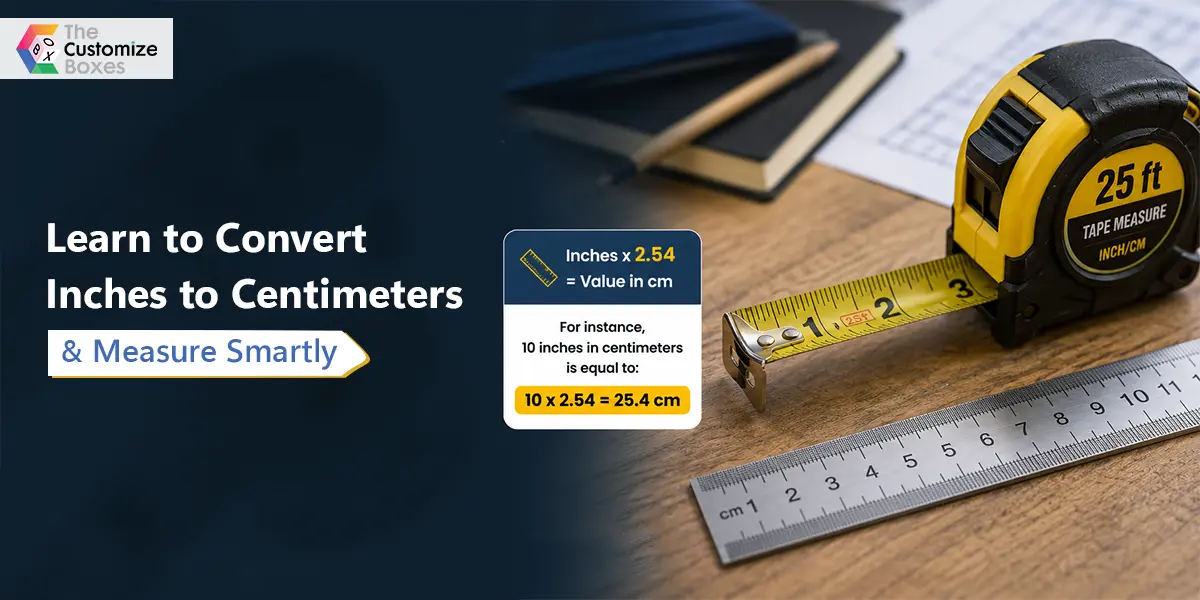
- Inches x 2.54 = Value in cm
For instance, 10 inches in centimeters is equal to:
- 10 x 2.54 = 25.4 cm
What Is an Inch?
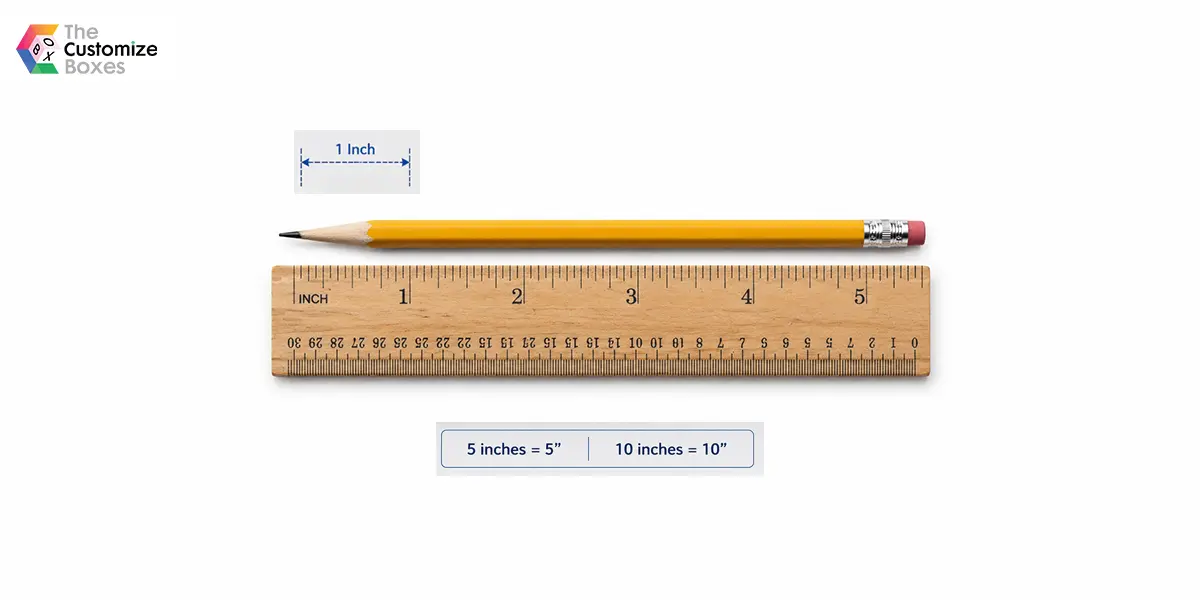
An inch is a common scale that is widely used in the United States to measure the length of an object. In schools, kids have a ruler — a very useful tool for their geometry box that allows them to draw lines and make drawings with accuracy rather than guesswork.
Meanwhile, the inches are represented by double quotes (”) as anyone will immediately understand what it means. Such as, 5 inches can also be written as 5” or 10 inches as 10”. No matter which pattern is being followed, each represents the same content. So, next time, if you wonder about what the symbol of an inch is, don’t forget it’s just double quotes and that’s it.
How Long is an Inch?
Before you know the exact length of an inch, it’s important to know about its origin, which is derived from the Latin word “uncia”. The simple explanation of the word is one-twelfth of a single foot, or you can also refer to it as one-third of a palm.
So, in practical terms, an inch is around 2.54 cm long, which is also another measurement unit that we’ll explore below. Yet for better understanding, an inch is 1/6th of a rule if it’s 6 inches in length. Or for the 1-foot-long ruler, it’s around 1/12th of it.
Fractions of an Inch
As per the measurement units, the inches can be measured in fractions of 16, which can be equally divided into 8, 4, and 2 accordingly. That’s why half an inch can be written as 1/2 inch, while a quarter of an inch equals 3/4 inch. Below is the table you can refer to for a better understanding of it:
|
In Fraction |
In inches “ |
|
1/16 |
0.0625 |
|
1/8 |
0.125 |
|
3/16 |
0.1875 |
|
1/4 |
0.25 |
|
5/16 |
0.3125 |
|
3/8 |
0.375 |
|
7/16 |
0.4375 |
|
1/2 |
0.5 |
|
9/16 |
0.5625 |
|
5/8 |
0.625 |
|
11/16 |
0.6875 |
|
3/4 |
0.75 |
|
13/16 |
0.8125 |
|
7/8 |
0.875 |
|
15/16 |
0.9375 |
|
1 |
1 |
What is a Centimeter?
Secondly, a centimeter is also a measurement unit which is from this time a part of the metric system. It is denoted as 1/100th of a meter, or we can mention it as 0.01. The word centimeter is also derived from Latin, which refers to the centum, which means hundred. While the representation of centimeters is cm.
For instance, 1 cm equals 10 mm, which can be calculated by dividing the cm by 10. If we say 20mm or 2cm, both values are correct as they refer to the same outcome.
Read our comprehensive guide on converting milliliters to cups.
Quick Way to Convert Inches to Centimeters
There’s no complex formula you may have to remember or do multiple calculations for this conversion. The best way to do this is by following the equation:
- Centimeters = inches x 2.54
For instance, if an object is 15 inches in length, its cm will be:
- = 15 x 2.54 => 38.1 cm
How Many Centimeters in an Inch?
|
Inches (") |
Centimeters (cm) |
|
1 in |
2.54 cm |
|
2 in |
5.08 cm |
|
3 in |
7.62 cm |
|
4 in |
10.16 cm |
|
5 in |
12.70 cm |
|
6 in |
15.24 cm |
|
7 in |
17.78 cm |
|
8 in |
20.32 cm |
|
9 in |
22.86 cm |
|
10 in |
25.40 cm |
|
20 in |
50.80 cm |
|
30 in |
76.20 cm |
|
40 in |
101.60 cm |
|
50 in |
127.00 cm |
Usage of Inches & Centimeters in the Real World
Both of the units are common and widely used in various industries. Below is the table that tells the difference between the two options and figures out where those units are in practice.
|
Feature |
Centimeter (cm) |
Inch (in) |
|
System |
Metric (Base-10) |
Imperial/Customary |
|
Primary Region |
Worldwide (outside the USA) |
USA, Liberia, Myanmar |
|
Precision |
Excellent (use mm for higher) |
Good (using fractions) |
|
Conversion |
Very Easy (10mm = 1cm) |
Complex (12in = 1ft) |
|
Best For |
Science, Tech, Tailoring |
Construction, Woodworking |
Why Measurements of Inches & Centimeters Matter in Packaging?
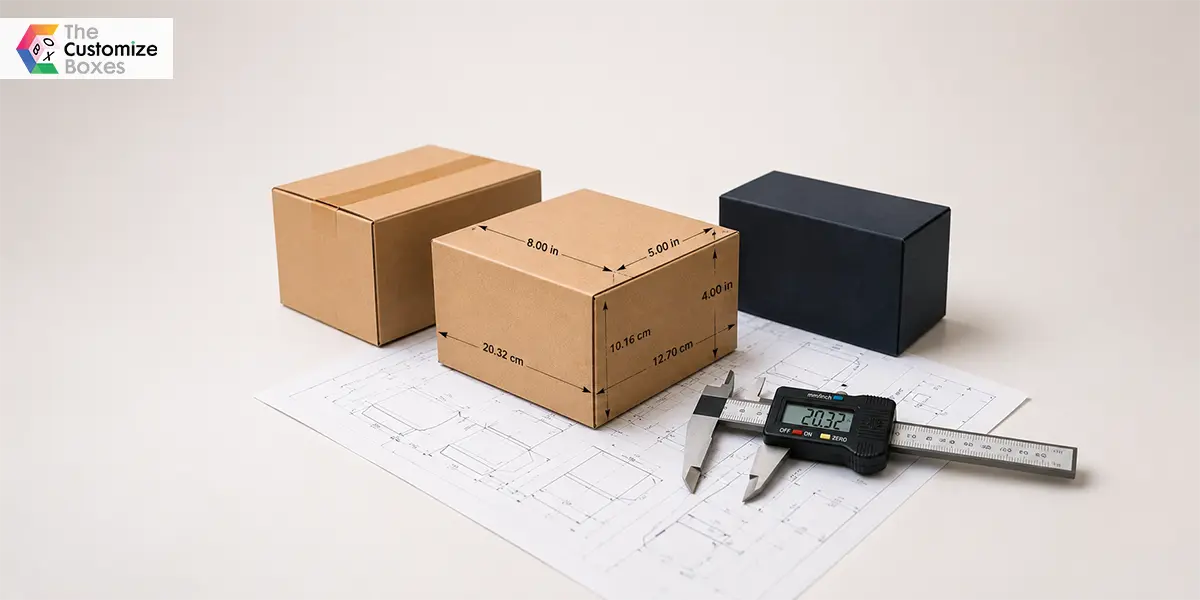
The packaging is the core presentational aspect of the product, and its dimensions count a lot. Reliable companies like The Customize Boxes utilize both units, including inches and centimeters, to comply with the client’s demands. Yet, we aim to ensure consistency and flawlessness for every order we take on.
Because we understand that any miscalculation in packaging can impact the entire production line and can raise questions about your branding. That’s why we’re very conscious about it from the start, so the accuracy of the output isn’t disturbed at all.
The Bottom Line
All in all, now you have learned how to convert inches to centimeters without getting into the complexity of numbers. It’s important to know what product or region you’re dealing with to determine what scale works best for you. If you’re still confused, it’s better to refer to the tables we’ve added throughout our blog post for your convenience.
Frequently asked questions
How much centimeter in an inch?
The exact value for centimeters after converting from inches is 2.54. So, this means each inch contains 2.54 centimeters, which is easy to calculate by simply multiplying the value by the conversion factor.
Which scale is best, centimeters or inches?
Both of the scales are ideal for counting the measurements. Yet, its usage varies as per the industry and precision requirements. For instance, inches are best to consider for construction related work. While centimeters is a reliable scale for science, tech, and tailoring fields.
Which scale is bigger, cm or inches?
The scale of an inch is much bigger and is mostly used for large-scale measurements, along with the combination of centimeters. Such as a laptop screen size is 15.6”. Here, 15 represents the inches while 6 shows the cms.
Do I have to convert inches to centimeters on a digital scale?
The conversion of inches to centimeters is limited only to manual measurements, but on a digital scale, it’s not the same. You can tune the scale to automatically convert the inches to cms and take the measurements on the go.