
In this guide
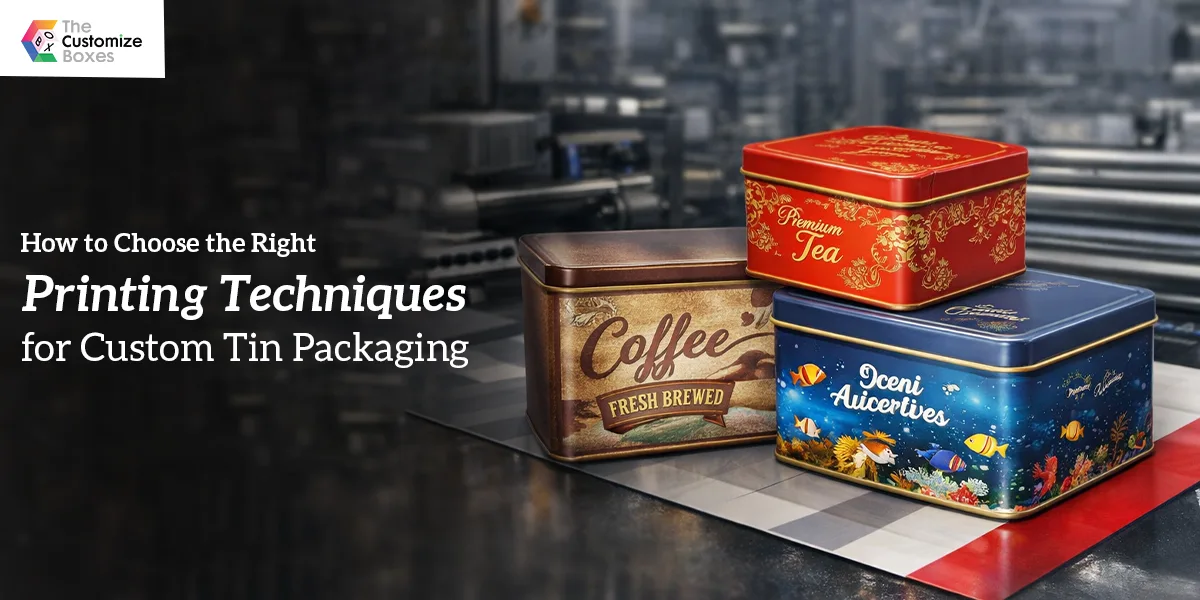
Custom tin packaging plays a crucial role in branding and marketing; therefore, the printing techniques for tin are what make them stand out. However, printing a metal tin is the polar opposite experience of printing paper or cardboard. The printing of metal tins requires precision, engineering, and aesthetics.
Unlike paper, metal has a reflective surface with distinct ink absorption, which demands heavy machinery, high-temperature curing, and a multi-step process. Hence, choosing the right printing technique determines how vibrant your artwork comes out, printing durability, mass production efficiency, and overall product perception. Explore this guide to learn the major tin printing techniques:
Importance of High-Quality Printing in Luxury Tin Packaging Branding
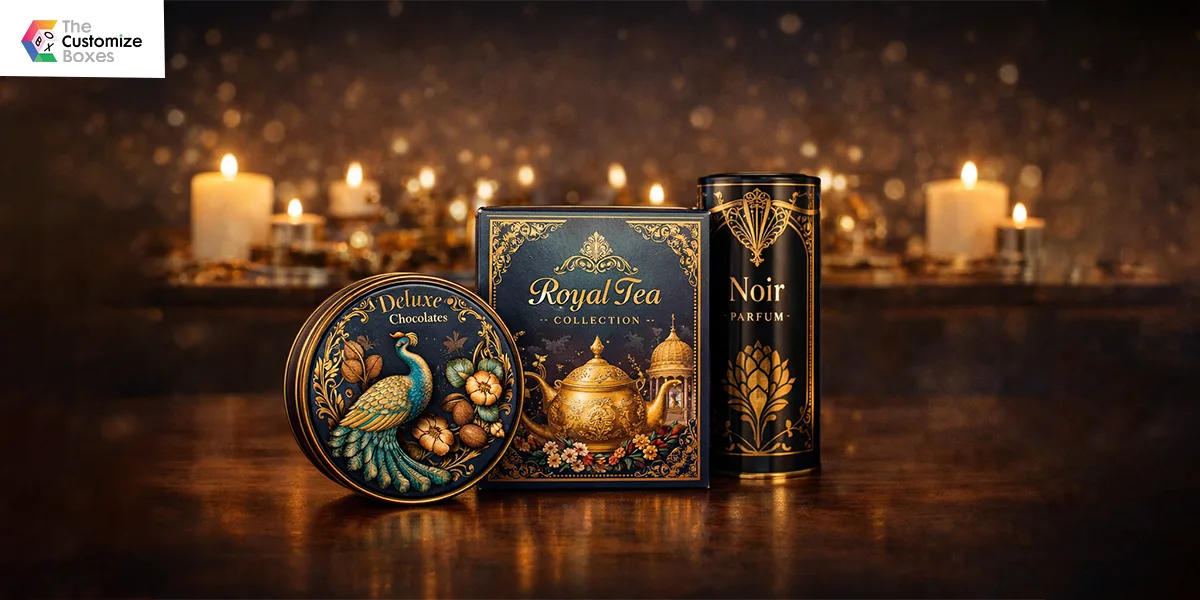
The importance of high-quality printing for tin packaging lies in three values:
Building Luxury Brand: In a crowded retail market, luxury tin packaging plays an important role in boosting product appeal and making it memorable among consumers. A precisely chosen printing and design define your product engagement from retail shelves to customers' doorsteps.
Customers' Perception: Consider optimizing visuals that create a tin packaging as an unboxing experience that drives emotional connection and brand loyalty. High-quality, detailed imagery on the tin creates a “work of art” experience that customers are more likely to retain and reuse.
Brand Differentiation: Custom tin packaging printing allows you to differentiate your brand among competitors by leveraging custom artwork that does the talking.
Major Printing Techniques for Custom Tin Packaging
Let’s explore common printing techniques for your tin plates that don’t overdo work and print out high-quality graphics:
Offset Printing
Offset printing, also known as lithography, is a process of transferring ink from a printing plate to a rubber blanket and then onto the final printing surface. This printing technique is commonly used for commercial printing and for producing high-quality printing.
Here’s how offset print works on a tin plate:
- Prepress and Plate Creation: This process begins with preparing the artwork and separating colors to CMYK or Pantone colors. After this process, the image is transferred onto aluminum plates using a laser or chemical process.
- Ink Application: Next, ink is applied to the plate using rollers. The non-image areas are repelled while ink adheres to the image area.
- Printing: The ink is transferred from the printing plate onto a rubber blanket cylinder, which then presses the ink onto the tinplate. The printing surface is fed through the printing press, and each color is applied separately in a series of passes.
- Drying & Finishing: After printing, the materials go through a drying process in an oven, which allows the ink to set. Then, finishing processes begin, like cutting, varnishing, folding, and binding.
Digital Printing
This modern printing techniques involves direct transfer of digital files onto printing surfaces such as tin or cardboard. This process turns the printing process flawless and simplified:
Here’s how digital print works on a tin plate:
- Design Creation: In digital printing, the artwork is created digitally, often using software like Adobe Illustrator or Photoshop, with 300 DPI or higher for quality resolution.
- File Transfer: The finalized, high-resolution file is sent directly to the digital printer's computer, eliminating the need to make physical printing plates.
- Printer placement: The cleaned, pre-primed tinplate sheet is loaded onto the flatbed printer.
- Ink Application: The printer applies, in one pass, the full-color, high-resolution image directly onto the tinplate using UV-curable, inkjet technology.
- Curing & Finishes: Immediately after the ink is applied, high-intensity UV lamps attached to the printer's print head cure the ink. After the printing is complete, the printed tinplate is usually coated with a layer of varnish or matte oil using a coating machine.
Screen Printing
Screen printing involves transferring ink through a mesh screen onto a substrate material. Screen printing is a popular option for printing versatile and vibrant colors.
Here’s how screen print works on a tin plate:
- Design Creation: Create the artwork, typically using vector software like Adobe Illustrator or CorelDRAW.
- Screen Preparation: Select a mesh screen (polyester or stainless steel) based on design complexity and apply a light-sensitive emulsion coating using a scoop coater.
- Printing setup: The prepared screen is mounted onto a screen printing press or machine. The tin cans are securely positioned on a flat surface or fixture beneath the screen.
- Heat Curing: Since tinplate does not absorb ink, the ink must be cured. The printed sheet is typically passed through an oven at around 150°C–200°C for 10–12 minutes to harden the ink.
Heat Transfer Printing
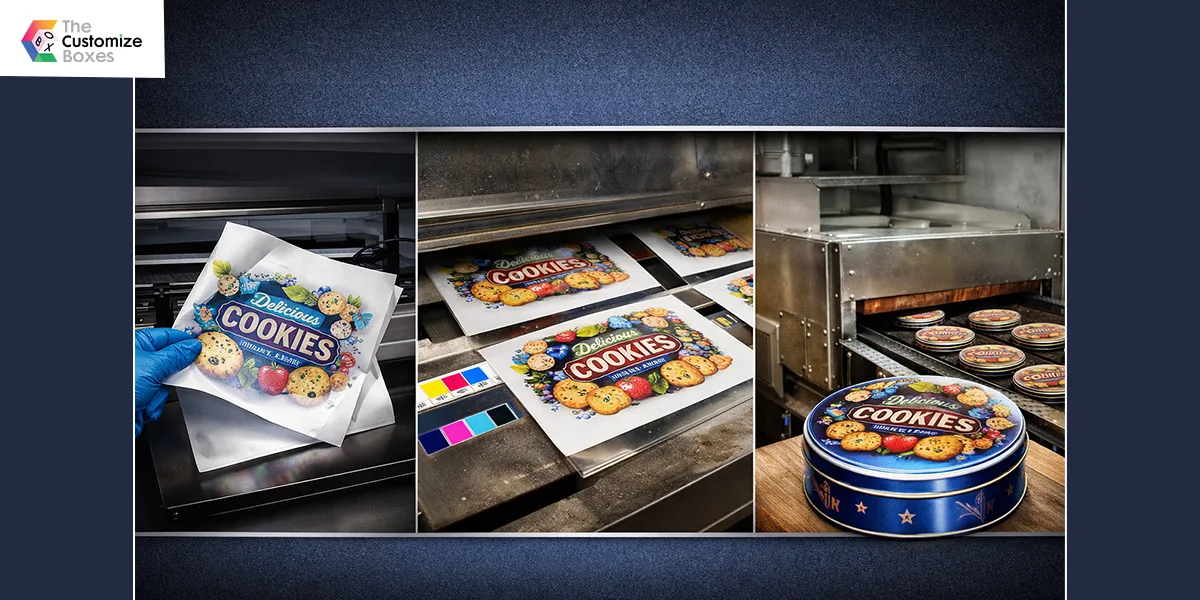
Also known as thermal printing, involves transfering design or image from a carrier film to tin using heat and pressure. Commonly used for cookie tins and metal canisters.
Here’s how Heat Transfer print works on a tin plate:
- Design Creation: When using a heat transfer decal, the design is printed in reverse onto a special carrier paper or film.
- Color Application: Colors are applied, typically with multiple passes (CMYK) or via spot colors (Pantone) for better accuracy.
- Oven Baking: After each color is printed or after the final design, depending on the machine, the tinplate passes through a long industrial curing oven.
Embossing & Debossing
Embossing and debossing techniques are applied to make printed text raised or recessed on the surfaces of tins. These finishes add a three-dimensional tactile element to the printed design and enhance the visual appeal of your product.
Embossing: In embossing, the design is raised above that make your printing pop out. This finishes add sensory elements to your packaging and enhances user experience.
Debossing: In debossing, the design is pressed on the surfaces of tin, creating a depth and sunken effect. This printing is ideal for making your tin packaging stand out in retail shelf.
Consider the Following Factors When Choosing Printing Techniques for Tin
Design Complexity: Consider high-resolution printing for intricate, bold detail and vibrant color designs, such as offset or digital printing.
Cost & Time Considerations: Cost may vary according to mass production; for example, high-quality printing demands more time and precision, which can increase the time and cost. You can choose offset printing or digital printing for mass production, as it is cost-effective and avoids plate setup costs.
Tinplate Thickness for Quality Printing: The thickness of the tinplate can also influence printing; make sure your tinplate thickness varies between 0.21 and 0.35mm. This will allow deeper embossing and reduce oil canning.
Durability & Resistance: Tins often need to withstand handling, shipping, and environmental factors. Choose techniques that offer superior ink adhesion, such as screen printing or, for industrial use, fiber laser marking for permanent, high-contrast marks.
Conclusion
Choosing the right tin printing method determines your brand in the competitive market. It delivers the brand aesthetics, value, and accuracy. With careful artwork placement, durable ink, and finishes, your tin packaging will deliver a lasting impact on potential prospects.
Let’s design your tin packaging artwork together! Contact us today!
Frequently asked questions
How to print on a metal tin?
Printing on a metal tin is best achieved through sublimation, which involves printing a mirrored design with sublimation ink, taping it to a cleaned tin, and applying heat (400°F/204°C) for 3-4 minutes
What type of printing is used for tin packaging?
Lithography (offset printing) is the primary method for tin packaging, ideal for high-volume, high-quality, and multi-color designs. It uses a metal plate to transfer images onto a rubber blanket, then onto the tin. Other methods include screen printing for customization, digital printing for small runs, and UV printing.
What kind of paint will stick to tin?
Today, tin is still a great surface to paint on, and modern painting is enjoyed with fun, vibrant, long-lasting acrylic paints.
Is the screen printing technique better for tin packaging?
Screen printing is an excellent, but not necessarily superior, technique for all tin packaging, as its suitability depends heavily on the project requirements (small vs. large runs) and design complexity.