
In this guide
Whether you run a beverage business or manufacture pop cans, you can’t neglect exact ounces. Understanding exact volumes helps you minimize product waste and maintain consistent consumer quality.
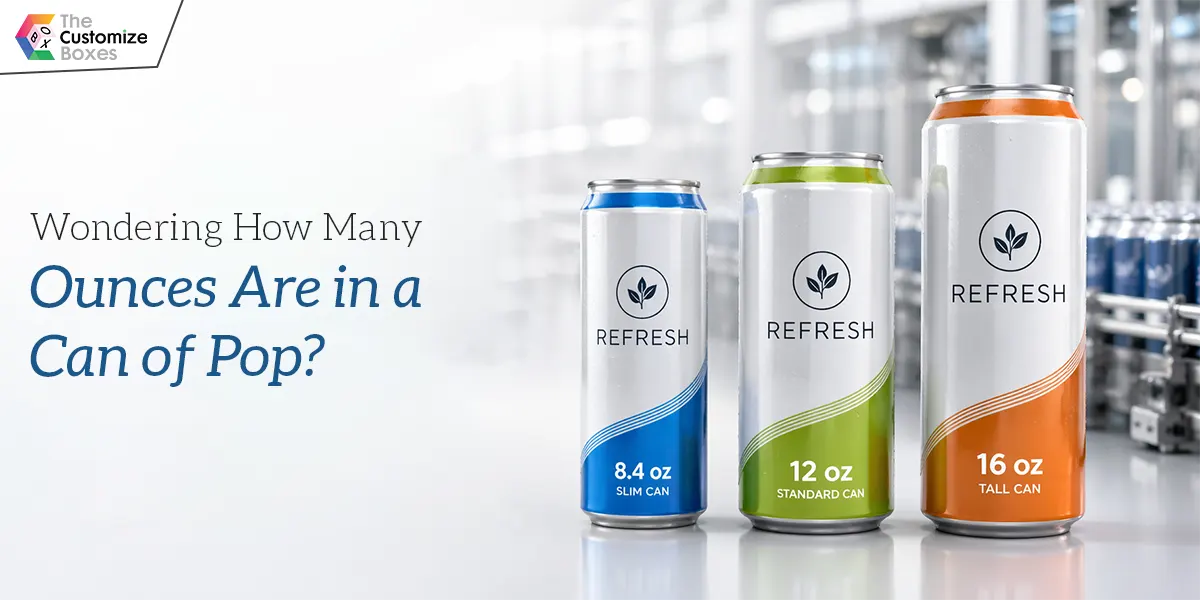
When adapting to new container types, like taller or thinner, volume also varies. And you must know the specific volume of a can, e.g., 8.4 oz, 12 oz, or 16 oz. Also, explore how many ounces are in a can of pop to maximize your packaging efficiency. Let’s begin:
How Many Ounces Are in a Can of Pop?
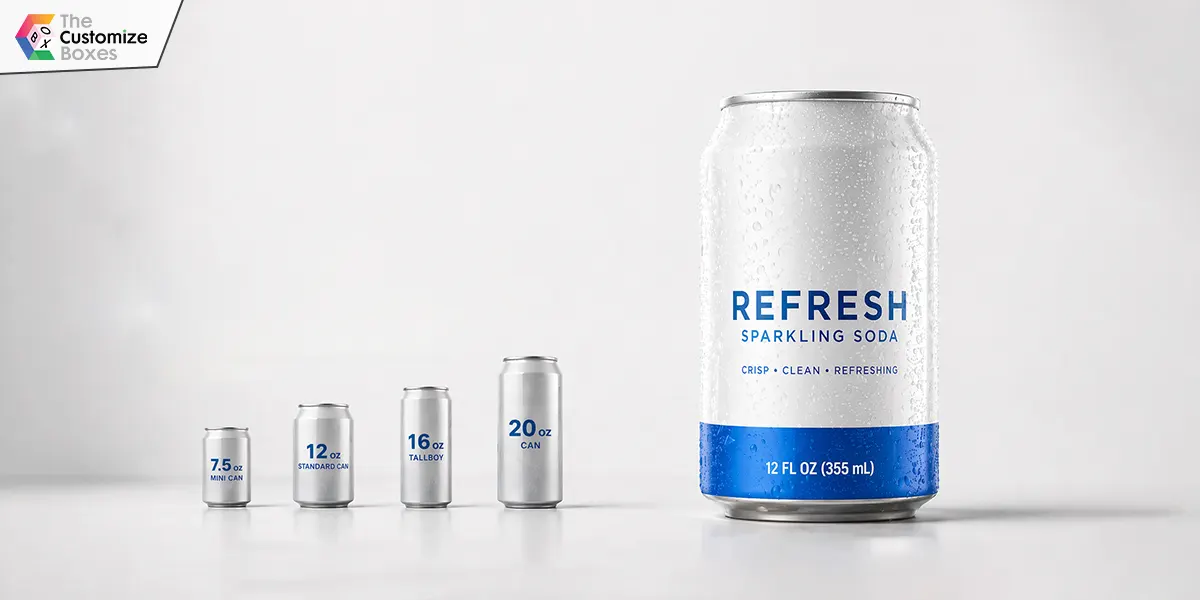
Without any delay, let’s explore how many ounces are in a can of pop. A standard can of pop in the United States contains 12 fluid ounces, which is approximately 355 milliliters. This is the industry-standard size for individual cans, though other sizes like 7.5-ounce “mini” cans, 16-ounce “tallboys”, and 20-ounce cans are also available.
Standard Size of Pop Can
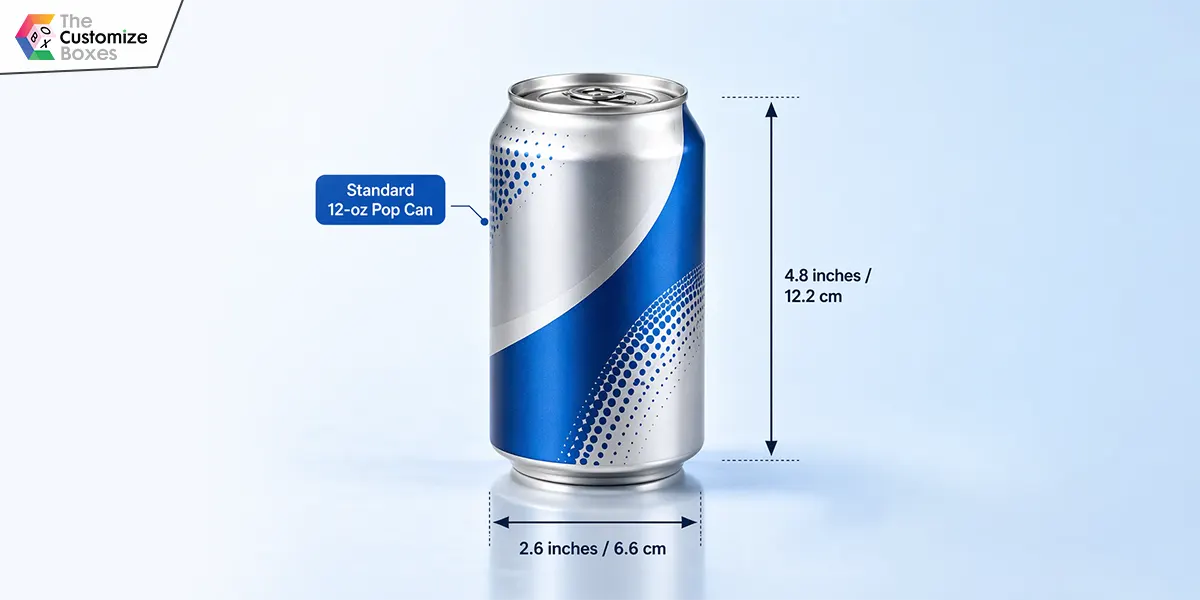
A standard 12-oz pop or soda can is approximately 4.8 inches or 12.2 cm tall and 2.6 inches or 6.6 cm in diameter. They weigh around 9.66 g. These aluminum containers are designed with a lid that is widely used across North America for soft drinks and beer.
Consider Size Variations of Pop Can Across Markets
Since you know the standard size of a pop can, now explore other available sizes to choose the one that best suits your needs. Have a look at them:
|
Can Types |
Size in Ounces and Millimeters |
Usage |
|
Slim/Sleek |
12 oz or 355 ml |
For seltzers and functional beverages |
|
Mini |
7.5 oz or 222 ml |
Convenience stores & retail, schools, lunchboxes, corporates, and events |
|
Large or Tallboy |
16 oz or 473 ml |
Craft beer and energy drink markets |
|
Stovepipes |
19.2 oz or 568 ml |
Entertainment venues such as sports stadiums, concerts, and music festivals. |
If we look at their usage by region, 12 oz is the standard size in North America, as discussed above. But 16 oz tallboys are also popular for beer and energy drinks. Talking about Europe, 355 ml is the standard size, but 7.5 oz slim cans are particularly popular for energy drinks.
And when it comes to Asia-Pacific, slimmer 330ml or 168 mm tall cans are most commonly used compared to shorter, wider Western counterparts. For example, 350 ml is very common alongside 500 ml in Japan.
Coming to special markets such as Hawaii, uses a larger 206-diameter lid due to local production constraints. The 206 cans have four ridges under the lip to reinforce the overall, more durable design, which is, historically, less prone to damage than the newer 202 style.
What are Fluid Ounces in Beverage Packaging?
Keep in mind that fluid ounces (fl. oz.) in beverage packaging measure the volume of liquid inside a container rather than its weight. 1 fl. oz is approximately 29.57 mL, usually representing 1/16 pint or 1/128 of a gallon.
However, common U.S. beverage sizes include 12 fl. oz. (soda cans), 16.9 fl. oz. (bottled water), and 20 fl. oz. (soda bottles). While US customary fluid ounces are roughly 29.57 mL, Imperial (UK) fluid ounces are smaller, at approximately 28.41 mL.
Tidbit: Your labels must accurately state the volume of the contents, often rounded down to ensure compliance, e.g., slightly more than 4 fl. oz. is labeled as 4 fl. oz.
How to Measure the Dimensions and Volume of a Pop Can?
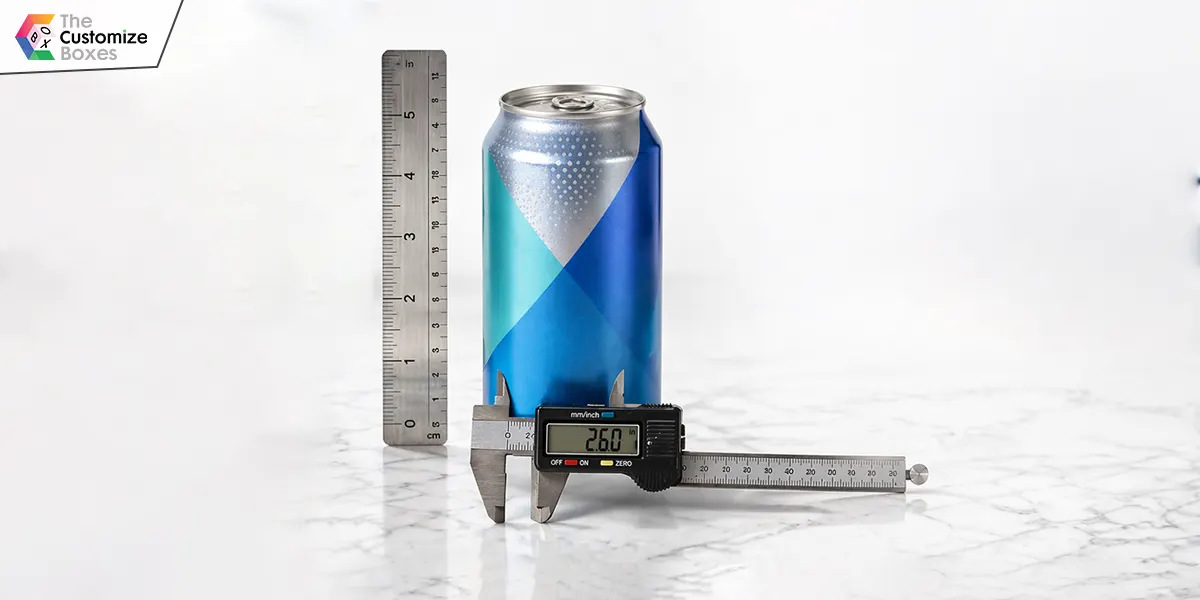
To measure a standard 12-oz pop can, use a ruler or caliper to find the height (approx. 4.8 inches / 12.2 cm) and the diameter at its widest point (approx. 2.6 inches / 6.6 cm). Here is a step-by-step guide:
-
Measure Dimensions Using a Ruler
Pick a caliper, ruler, or measuring tape and measure from the flat base to the top rim. A standard 12-oz can is about 4.83 inches (12.2 cm) tall. Then, calculate the widest point of the cylindrical body that’s roughly 2.6 inches (66 mm). And divide it by 2. For a 2.6-inch diameter, r = 1.3 inches
-
Calculate Volume
Because a pop can is a cylinder, use the standard mathematical formula: V = πr²
Resolve this formula by firstly measuring the height. Then, square the radius, and multiply that number by 3.14159. For example, your soda can is 12 oz. Then, your r = 1.3 inches, h = 4.8 inches.
So Volume = 3.14159 x 1.3 x 1.3 x 4.8 ≈ 25.48 cubic inches
-
Measure Liquid Volume
Pour the contents into a graduated cylinder or measuring cup to read the volume directly in milliliters (mL). Afterward, weigh the full can, subtract the empty can weight, and divide by the beverage density, although reading the label (355 mL) is more practical.
Explore Beverage Packaging Standards and Future Trends
Beverage packaging is rapidly transitioning towards smaller, single-serve formats such as 7.5oz/222ml mini cans, <250ml bottles to meet convenience and health demands. Key future trends include the dominance of eco-friendly materials like PET, paper-based bottles, and smart, connected closures to enhance sustainability, complying with strict EPR and truth-in-labeling regulations.
Where to Get Well-Sized Pop Cans?
Since you have explored in depth how many ounces are in a can of pop, it’s important to choose a reliable custom packaging manufacturer to ensure well-sized cans based on your fluid ounces. The Customize Boxes is one of those manufacturers that specializes in customizing pop cans with perfect sizes tailored to ounces.
Frequently asked questions
What is the standard soda can size?
The standard soda can size in the United States is 12 fluid ounces (355 ml), which typically measures approximately 4.8 inches (122 mm) in height and 2.6 inches (66 mm) in diameter.
How many ounces are in a mini can of soda?
A standard mini can of soda contains 7.5 fluid ounces (222ml). They are designed for smaller portion sizes and are popular for reducing sugar or caffeine intake compared to the standard ones.
What are the dimensions of a 12-oz soda can?
A standard 12-ounce (355 ml) soda can is approximately 4.83 inches (122.7 mm) tall and 2.6 inches (66 mm) in diameter at its widest point. The circumference is roughly 8.2 inches (208 mm).
How many oz in a can?
A standard soda or beer can in the United States typically holds 12 fluid ounces (approximately 355 milliliters). While 12 oz is the standard, other common sizes include 7.5 oz (mini), 8.4 oz (energy), 16 oz (tallboy), and 19.2 oz (stovepipe).