
In this guide
Tin boxes have come up in the US market due to their timeless elegance. Beyond their aesthetic allure, they are strong enough to protect delicate food items like cookies. That is why tin packaging boxes are becoming popular among consumers and food brands.
But the question arises, are tin boxes genuinely safe for direct food contact? Its answer relies on your adherence to strict FDA regulatory frameworks. Read this blog to explore FDA regulations in detail to navigate the challenges of food-grade tin packaging:
Why FDA Compliance Matters for Food Tin Boxes?
The Food and Drug Administration (FDA) is the largest and most authoritative organization in America. It ensures legal compliance and protects consumer safety when it comes to food packaging.
If you choose metal containers for packing food items, you must utilize FDA-certified materials that prevent toxicity, contamination, or deterioration of food quality. Ignoring the FDA requirements for food packaging may put your business at high stake.
You may face severe consequences, including product recalls, fines, and the inability to sell your food items in the American market. Avoid it by fulfilling the FDA criteria for tin food packaging to stay relevant in the food market.
Meet FDA Needs for Food Metal Containers
Since you have understood the importance of choosing FDA-compliant tin boxes for food, now consider the following factors to surpass FDA packaging regulations:
Choose Food-Grade Materials
The primary materials for tin boxes include tin-plated steel and aluminum. But their packaging materials go beyond tinplate and aluminum. So choose the materials given below, following the recommended suggestions:
-
Steel Core
Because steel can react with food, FDA compliance usually requires covering the steel core with a food-safe lacquer or liner (e.g., epoxy resins) that separates the metal from the food, particularly for acidic or salty foods.
-
Tin Coating
Tin is used to line steel containers, preventing iron from directly reacting with food. Tin coating preserves the food's taste, odor, and nutritional value. Also, it does not leach harmful substances into the food.
-
Virgin Materials
The FDA requires that packaging materials not allow harmful substances to migrate into food. Virgin materials are generally considered more inert and less likely to release unwanted chemicals than recycled materials, which might contain unpredictable contaminants.
-
Other Approved Metals
The FDA approves the use of aluminum, such as alloys 3003 or 8011, with coatings to prevent corrosion by acidic foods. Tin-Free Steel, also known as chromium oxide, is frequently used for can ends and lids that require organic coatings to prevent corrosion, as it lacks the sacrificial protection of tin.
Avoid Common Mistakes
When choosing a supplier for tin food boxes, don’t overlook improper coating thickness, unverified supplier certification, or inks that are not FDA-approved. The tin layer itself typically ranges from (0.0003 – 0.0008 mm) thick on each side, though thicker coatings are used for higher protection.
Coat Tin Boxes with Protective Linings
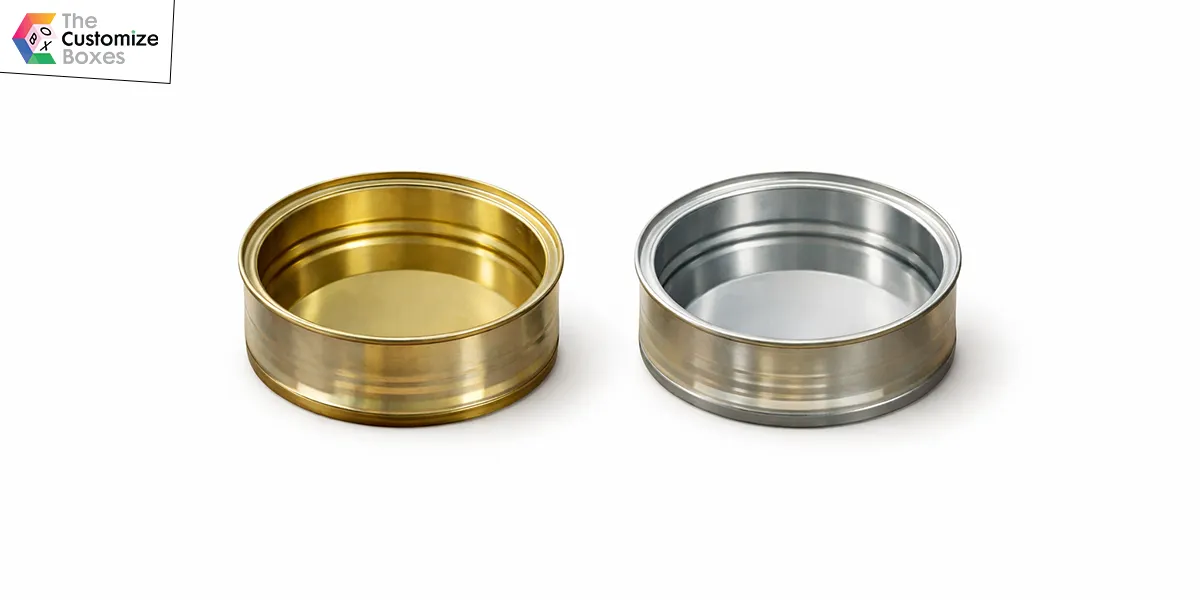
Though tinplate is safe, using internal coatings is essential for enhancing the safety and longevity of food items. Prevent corrosion, metallic taste transfer, or leaching of harmful materials into food by lining your tin containers with the following options:
-
Epoxy Resin Coatings
According to FDA regulations (specifically 21 CFR 175.300), you should choose epoxy resin coatings primarily for tin boxes. This is because they form an inert, durable, and protective barrier between the food and the metal.
-
Polyester (PET) Coatings
PET coatings serve as a modern alternative to traditional epoxy linings, primarily because they offer a BPA-non-intent (BPA-NI) solution that complies with FDA food-contact regulations. According to the FDA, these coatings are considered safe, non-toxic, and effective at preventing metal-food interaction while extending shelf life.
Ensure Rigorous Testing and Certifications
Compliance with FDA regulations doesn’t end with choosing the right materials and coatings. You must conduct a series of tests to ensure the validity and non-reactivity of your tin boxes with food:
-
Migration Tests
Migration testing for tin boxes ensures that chemicals from the metal or its internal coating do not transfer into food at unsafe levels. Because tin cans often contain acidic or fatty foods and undergo high-heat processing (like retort), your testing must simulate these extreme conditions.
-
Chemical Stability Tests
Measures the total amount of non-volatile substances that migrate from the tinplate or its interior coating into food simulants, ensuring they remain below regulatory limits. Ensures the lacquer (if present) adheres correctly to the tinplate and does not peel or blister, preventing iron exposure.
-
Heavy Metal Analysis
Detects migration of metals like tin (Sn), lead (Pb), cadmium (Cd), and chromium (Cr) from the tin container into food. The Toxics Packaging Clearinghouse recommends that the combined heavy metal concentration (Pb, Cd, Hg, Cr) in packaging should not exceed 100 ppm.
-
BPA-Free Verification
Obtain a formal document from the manufacturer declaring that the tin containers and their linings are free from Bisphenol A. Confirm whether the manufacturer uses "non-BPA" linings (such as polyester or acrylic coatings) instead of epoxy resins.
-
Third-Party Certifications
While a manufacturer may claim their tins are "food grade," third-party certifications (e.g., SGS, Intertek) provide the documentation necessary to prove safety to the FDA during an audit. Most major retailers and global brands require third-party, GFSI-recognized certifications (such as FSSC 22000 or ISO 22000) to verify that the entire manufacturing process follows Good Manufacturing Practices (GMPs).
Where to Get FDA-Compliant Tin Packaging Boxes?
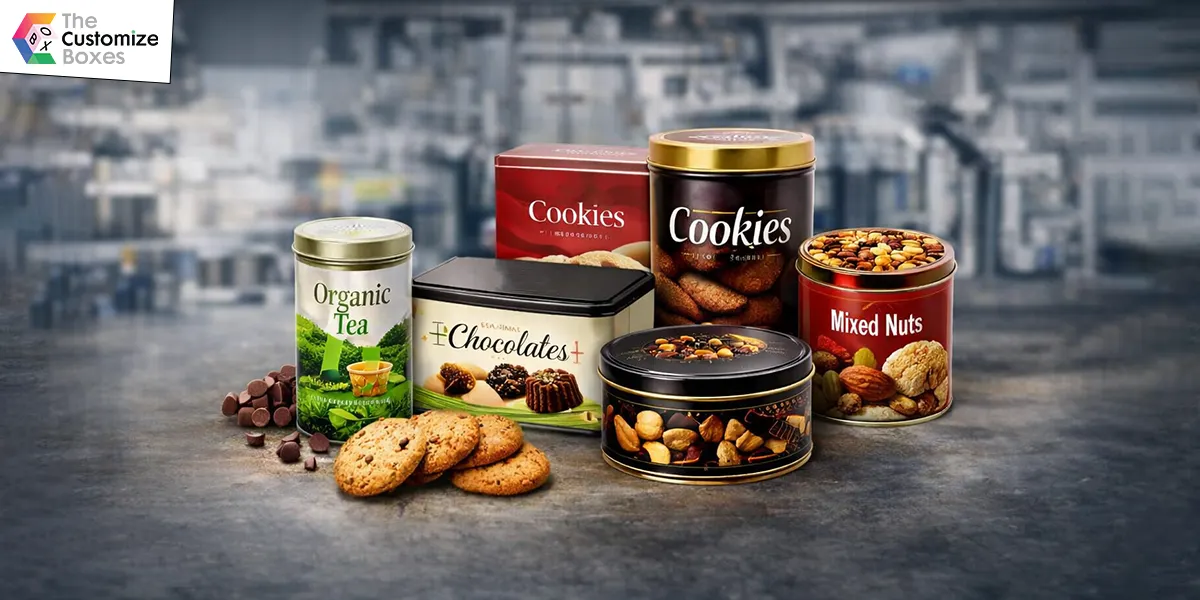
To sell your food products in well-customized tin boxes, you need to find a credible supplier that helps your business to navigate the complex regulations of the FDA. The Customize Boxes is one of those suppliers who ensure your tin boxes meet the safety regulations of the FDA.
Frequently asked questions
What is tin box packaging?
Tin box packaging is a durable, sustainable metal container made from tin-plated steel. It is used for storing or presenting products like food, cosmetics, and gifts.
Can I integrate a printed tin box with a magnet?
Yes, you can absolutely integrate a magnet with a printed tin box. It is a common technique for creating magnetic closures, DIY storage solutions, or decorative packaging.
What are food-grade materials for custom tin containers?
Food-grade custom tin containers are primarily manufactured using tin-plated steel (SPTE), tin-free steel, or aluminum, often coated with food-safe lacquers to ensure safety.
Where to find custom tin boxes for food packaging safety & compliance in the USA?
You can source custom tin boxes for food-safe, compliant packaging in the USA from manufacturers specializing in food-grade tinplate steel, such as The Customize Boxes and OXO Packaging.