
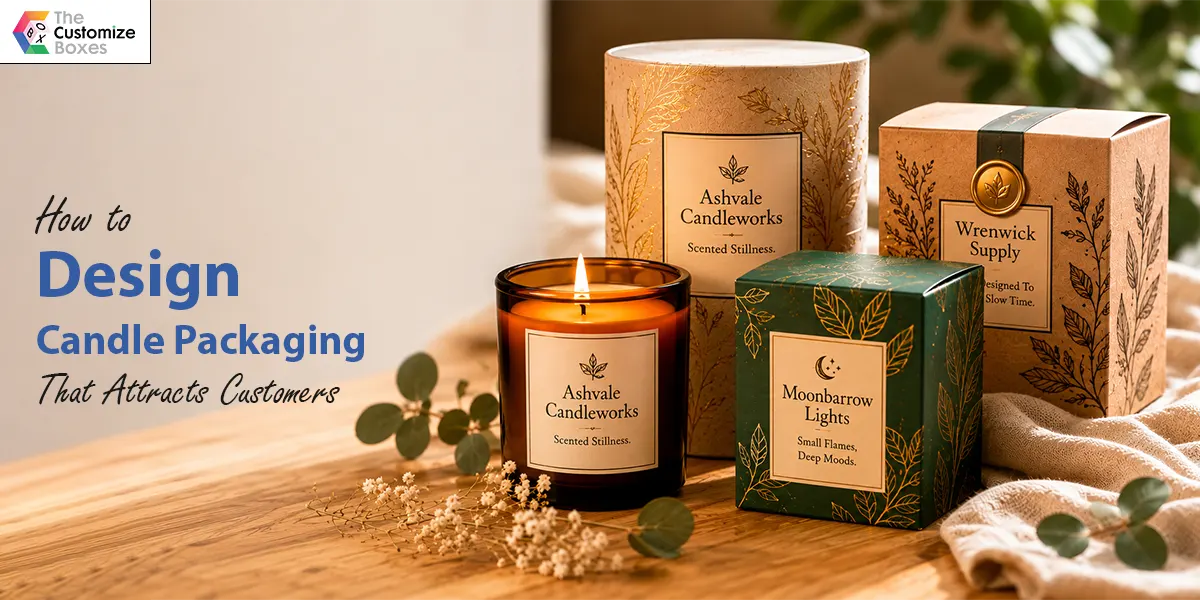
Whether you are launching a candle line or thinking out of the box to make your candle business rise and shine, you are at the right place. Because the modern candle market is getting competitive and adaptive day by day.
To ace the market, you must understand your consumer demands and desires. That’s where candle box packaging design plays a significant role. If you know how to design candle packaging that attracts customers, you’re already ahead of your competition.
And if not, read this blog to create distinctive packaging designs for your candles that can help you bring in more dollars. Let’s begin:
Define Your Brand Identity
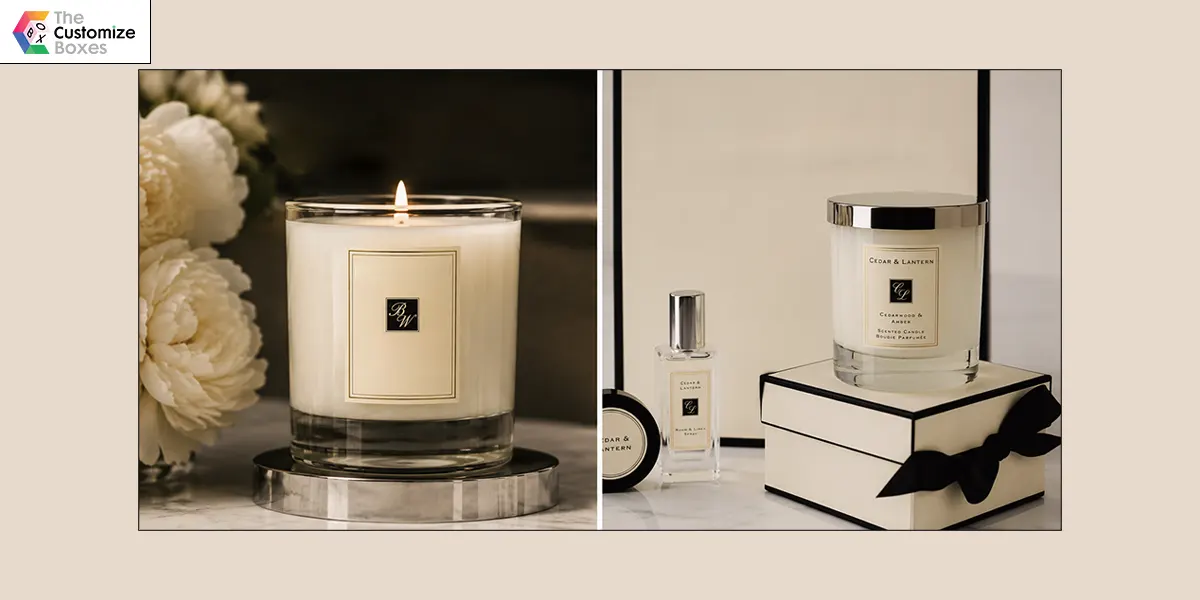
Since the candle industry is crowded, defining your branding prevents your candles from becoming invisible. Custom packaging designs reflect your brand’s specific identity, whether rustic, luxurious, or minimalist.
By aligning your luxury, rustic, modern, or minimalist design with your target market, your candles stand out from competitors on crowded shelves or on screens. You must make consistent use of specific brand elements like logos, colors, and typography across packaging labels and boxes.
When a consumer sees a consistent design across different candle lines, it strengthens familiarity and builds trust, increasing the likelihood of repeat purchases. So ensure your labels, jars, and packaging match your brand personality (e.g., minimalist, rustic, or bohemian).
For example, Jo Malone London, a scented candle brand, is known for its “understated luxury” design approach. They feature a consistent, clean, and classic design with a cream-colored jar and elegant black branding.
Prioritize Function and Quality
No-brainer, modern consumers invest in well-designed candle packaging. But you shouldn’t overlook functional packaging because it acts as a protective shield for your fragile and heat-sensitive candles during shipping.
Properly designed packaging protects your candles from extreme heat, preventing melting or deformation. Where first impressions drive sales for your candles, high-quality and functional packaging simultaneously conveys your brand value and boosts customer experience.
It means that if you choose glass jars for packing candles, they are susceptible to cracking or breaking in transit. So pick quality and sturdy packaging like corrugated cardboard or rigid boxes to ensure your candle jars arrive intact at your customer's doorsteps.
Take inspiration from P.F. Candle Co., which exhibits a perfect example of functional and durable design. They use signature amber glass jars with kraft labels, offering an aesthetic that is both rustic and modern.
At the same time, these jars are designed to protect candles during shipping and handling. They ensure candles arrive in pristine condition. Candle jars are recyclable and reusable as consumers repurpose them for storage or as planters, encouraging a “zero-waste” lifestyle.
Focus on Label Design
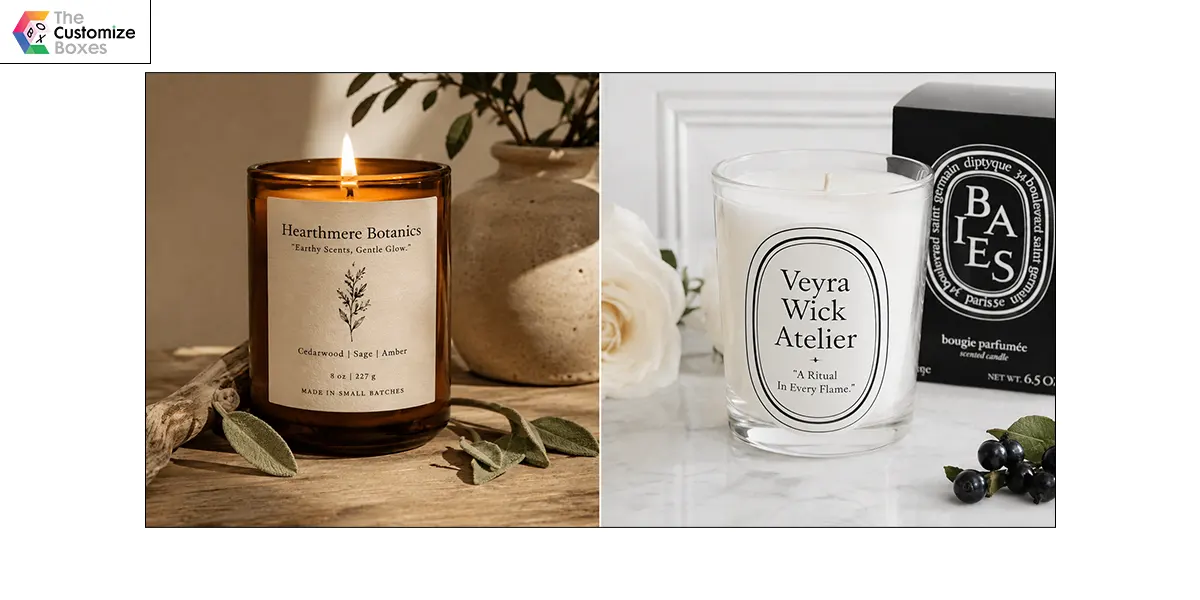
Modern candle buyers usually choose candles based on visual appeal and how they fit into their home decor. So labels serve as a primary marketing tool to grab their attention in a crowded market, communicate your scent and brand story.
With candle labels, you also build trust through safety compliance. Since customers cannot smell candles when shopping online, the design (colors, fonts, imagery) must convey the “cold throw,” or scent profile (e.g., earthy tones for woodsy scents, pastels for floral).
The label sets the mood, such as cozy, calming, or luxurious, helping consumers connect emotionally with your candles. Following this, your labels should be clear, professional, and tell a story, perhaps highlighting natural ingredients or a scent story. Doing so helps your brand evoke a feeling, such as calm or energy, in buyers.
Consider Diptyque, which is popular for using its iconic oval-shaped candle label. They maintain a strict, minimalist black-and-white aesthetic design on oval labels to stand out against the white wax and clear glass, providing a sense of “quiet luxury”.
Create a Memorable Unboxing Experience
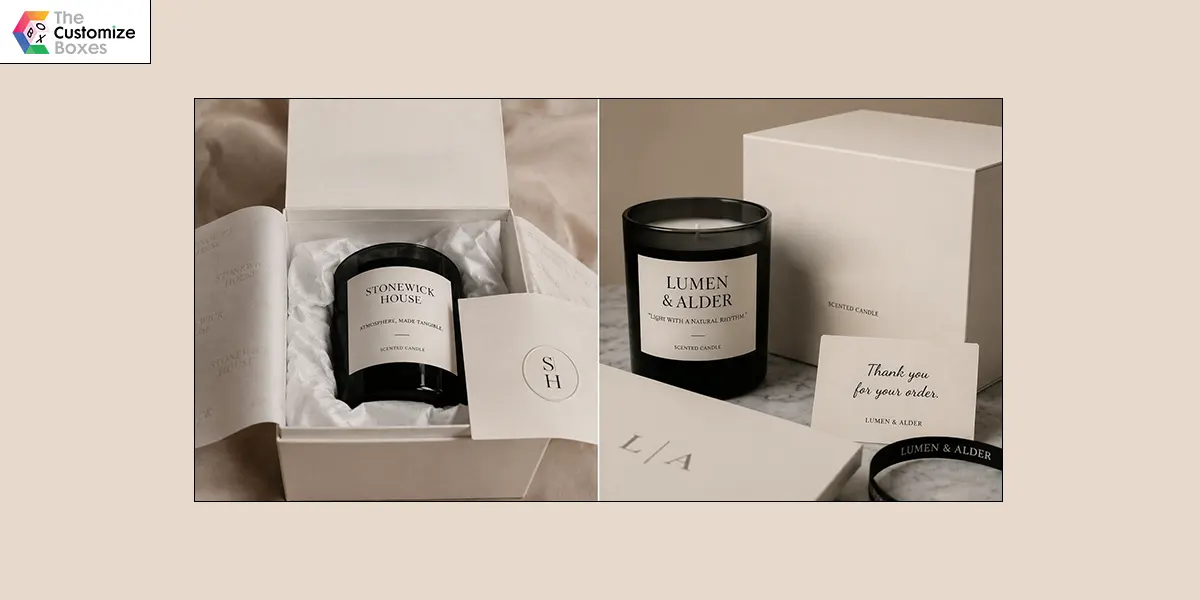
Modern buyers remember how you make them feel. And if you succeed in making them feel special, they become your loyal brand advocates. So turn your candle packaging into the first sensory touchpoint by elevating your design.
You can elevate the unboxing experience by adding special touches like tissue paper, custom stickers, or handwritten notes. This is because candles are sensory products; you can include sensory details, such as scent-infused tissue paper in custom candle boxes.
Apart from this, you can also use high-quality materials like embossed paper, textured linen, or heavy cardstock. They make your candle box feel premium before your customers even open it. Or include a hand-written thank-you note or a personalized note on the packing slip to make your customers feel valued.
For example, Byredo offers a “chicest of chic” unboxing experience with minimalist, heavy-glass vessels and sophisticated monochromatic packaging. The combination of the dark glass container against the minimalist box creates a sharp contrast that makes the candle look like a piece of art.
As a result, customers feel, look, and smell a luxurious scent with a slow, deliberate unveiling of their candles.
Use Tactile and Visual Elements
If your goal is to enhance the customer experience, you must build an emotional connection with them. And tactile elements exactly do that. They engage both sight and touch, that help you create a more memorable, lasting impression compared to visual-only packaging.
Put simply, merging visual design (colors, typography) with tactile feel (smooth vs. textured) instantly communicates the fragrance profile and mood. Techniques like embossing, debossing, and soft-touch coatings make your package feel more sophisticated and expensive, signaling high quality before the candle is opened.
Its prime example is Le Labo, famous for its “apothecary” aesthetic. It uses rough, textured paper labels that are personalized with hand-typed information in-store. Their raw, industrial-style labels and hand-stamped details create a “human touch”.
Aim For Eco-Friendly Packaging
Modern consumers prioritize sustainable products. And eco-friendly packaging improves brand trust and encourages loyalty among eco-conscious buyers. Using sustainable materials like FSC-certified paperboard, recycled materials, or biodegradable components positions your candle brand as ethical and premium.
Following this, use sturdy Kraft corrugated board or recycled cardboard boxes, which are eco-friendly and protect your candles during shipping. Or avoid plastic packaging inserts in candle boxes. Instead, use foam with biodegradable fillers like wood wool or molded pulp. You can also opt for reusable or recyclable jars and a minimalist labeling design to minimize waste.
A highly rated brand, Keap Candles, replaced traditional plastic protective materials (such as bubble wrap) with 100% recyclable, plant-based, or FSC-certified paper alternatives. It also reduced the total amount of packing materials, relying on structural design for protection rather than excessive filler.
Where to Find Well-Designed Candle Boxes?
Since you have explored how to design candle packaging that attracts customers, you know how to ace the competitive candle market. However, designing candle packaging comes with its challenges. To overcome them, contact a reliable custom packaging supplier like The Customize Boxes to customize well-designed candle boxes based on your business needs.
Making a candle packaging box involves measuring the candle, designing a template on cardstock, cutting, scoring, and assembling with strong glue.
The best way to package candles for shipping is to use a "box-in-a-box" method, wrapping each candle individually in bubble wrap or kraft paper to prevent breakage. Then, secure them in a sturdy corrugated box with ample filler like packing peanuts or crinkle paper to reduce movement.
The best containers for candles are thick-walled, non-porous, and heat-resistant, such as tempered glass jars (e.g., mason jars), metal tins, and glazed ceramics.