
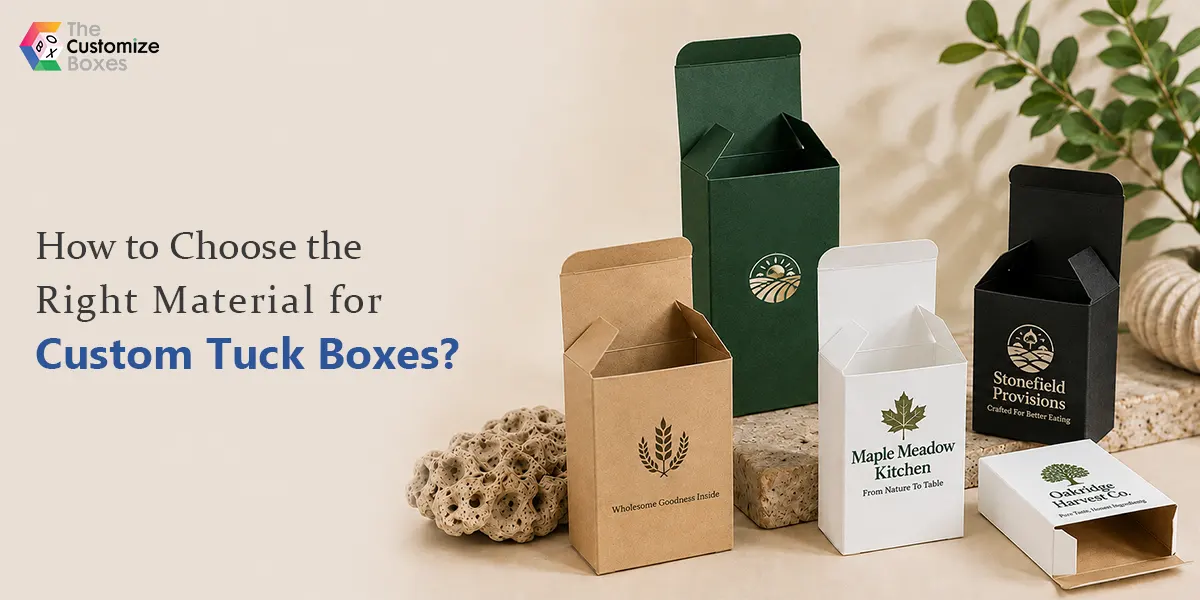
Custom packaging is all about presentation and standing out in the competitive market. While the style of the boxes plays a vital role in telling whether the box becomes distinctive or stays ordinary. Among multiple style options, one of the top ones is the tuck box. But its material is something that determines its functionality, and if not considered properly, the whole purpose dies.
Here in this detailed blog, we’ll uncover what materials you should consider and how you can independently analyze what works for you and what does not. So, read on to know more.
What are Tuck Boxes?
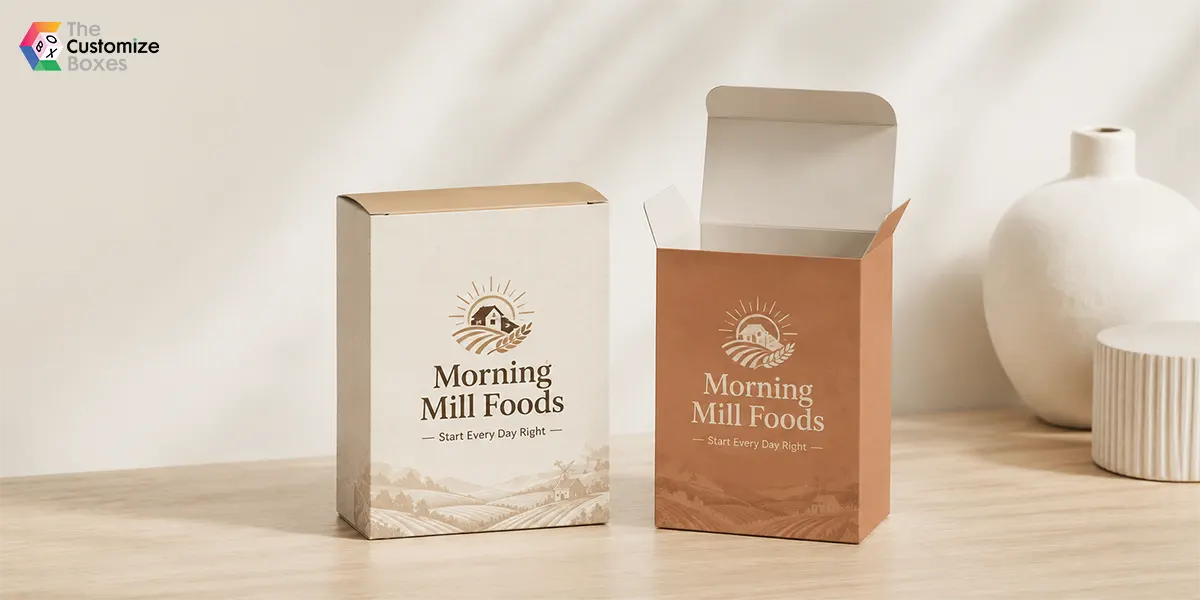
A tuck box is a lightweight, simple-structured box that features a hassle-free unboxing experience. The flaps of the tuck box are designed in a manner so it doesn’t conflict with the rest of the elements while offering a seamless unboxing.
Considerations That Tell the Ideal Material Selection for Tuck Packaging
To develop a fully functional tuck box, its material is something that defines it practically later on. There are tons of benefits of tuck boxes, but to reap them, you first have to consider the right packaging material to craft them. Some of the important aspects that must be catered to first for its craftsmanship are mentioned below:
Product Weight
Before we even go into the technical aspect of the material selection for the tuck box. Let’s first discuss the factor that clarifies the rest. Yes. We’re talking about the box’s ability to carry the weight in it. For instance, if the box requirement is to hold some grams of weight in it, then it can be crafted from light-stock materials.
Unfortunately, that’s not the case when heavyweight items must be added to it. For this, it demands sturdy and thick materials that are able to stay in their best shape and don’t compromise on the safety of the packed content.
Brand’s Preferences
Some brands prefer to go for utmost luxury and presentation, while others prioritize eco-friendliness. The material selection for them directly determines what works well for them and what doesn't. Since each of the materials has its own distinctive characteristics, any of them can be opted for a tuck box. The ideal option includes:
- Kraft Paper
- Cardstock
- Paperboard
- Rigid Materials
- Corrugated Cardboard
Paper Thickness
Once you determine the weight of the product to be added. The next step is the selection of ideal packaging material as per its actual specifications. You can go for thinner material options for lightweight product packaging or to craft the sleeves.
Whereas, for the heavy items, it’s recommended to choose the high-thickness boxes that easily handle the hardships of warehousing and logistics. Some of the most common thickness options you can go for printed tuck boxes can be:
- 12pt - 14pt (0.3mm - 0.35mm)
- 16pt - 18pt (0.4mm - 0.45mm)
- 24pt (0.6mm+)
- 1mm - 2mm
- 2mm - 3mm (approx. 80pt - 120pt)
What Not to Go for the Materials of Tuck Boxes?
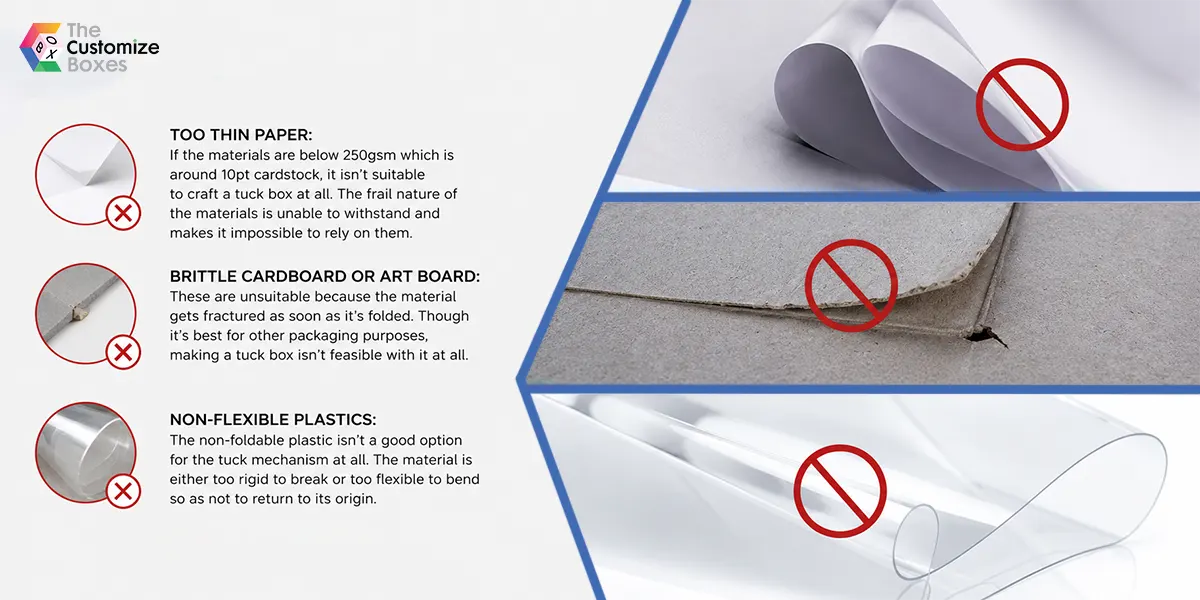
Alongside, there are some materials that are not suitable to utilize for the tuck boxes. Some of them may include:
- Too Thin Paper: If the materials are below 250gsm which is around 10pt cardstock, it isn’t suitable to craft a tuck box at all. The frail nature of the materials is unable to withstand and makes it impossible to rely on them.
- Brittle Cardboard or Art Board: These are unsuitable because the material gets fractured as soon as it's folded. Though it’s best for other packaging purposes, making a tuck box isn’t feasible with it at all.
- Non-Flexible Plastics: The non-foldable plastic isn't a good option for the tuck mechanism at all. The material is either too rigid to break or too flexible to bend so as not to return to its origin.
The Tuck Line
All in all, we hope you can easily identify what packaging materials work best for the tuck boxes and what don’t. If you’re still confused or if it’s your first time, then consult with an expert for a better understanding. You can reach us by writing your query to sales@thecustomizeboxes.com or calling at (972)-590-8867 for on-call support.
There are multiple closure mechanisms for tuck-top boxes. Based on the product’s presentation and packaging requirements, they’re integrated on the box. The common box’s style may include:
- Straight Tuck End (STE)
- Reverse Tuck End (RTE)
- Auto-Bottom Box
- Snap-Lock Bottom Box
- Tuck Top Mailer
- Roll End Front Tuck
Indeed. The tuck boxes can be crafted with more than one material, having multiple layers to strengthen the overall structure.
Not at all. Rather, tuck boxes offer top user convenience as the closure offers customers ease to open and close the box on the go. That’s why they’re preferred as the ideal choice over random box style options.
Tuck boxes crafted from biodegradable materials are highly eco-friendly. Either they’re settled down in the soil or recycled to turn material into pulp. That’s how it reduces the demand for virgin resources that make the same packaging.