
In this guide
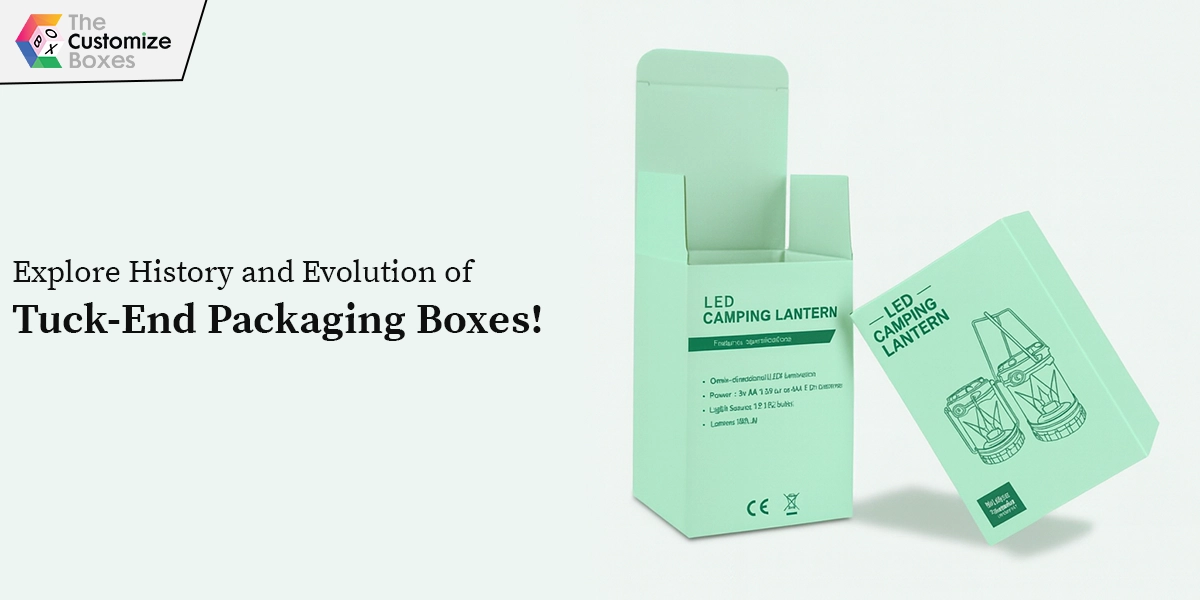
Tuck-end boxes feel familiar because they are everywhere. Whether you tear open a cosmetics carton in the bathroom or the small cereal pack you pour into a bowl, these boxes serve best.
Because of that humble “tuck” of a flap that slides into the carton to close. Tuck-end boxes have a long yet interesting history, from material innovation to digital customization. Here is the history and evolution of tuck-end packaging boxes and where it’s heading!
The Late 19th Century: From Wood Crates to Folded Paperboard
Long before paperboard cartons, items were moved and stored in wooden crates and boxes. The late 19th century brought two converging changes that made folding cartons the family that contains the tuck-end boxes’ style.
An important moment came when Brooklyn printer Robert Gair discovered that printing machinery could be adapted to cut and crease paperboard in one pass. This unexpected insight around the 1870s – 1880s enabled cheap, reproducible, flat-packed cartons that could be shipped and later folded into three-dimensional containers at scale. The folding carton or tuck box is widely credited to this period and to Gair’s commercial innovations.
The Early 20th Century: Production Techniques Made Tuck Boxes Mainstream

There are two manufacturing techniques that made tuck-end boxes cheap, precise, and beautiful. One technique includes die-cutting and creasing machines that cut blanks and create fold lines in one pass, producing uniform, fast-to-fold cartons. The mass-market use of die-cutting allows custom tuck boxes with logo to be made in huge runs at low cost.
Another technique includes pre-print and finishing processes, where printers adopted offset and later digital pre-printing of full-color artwork on large sheets. Then, they are die-cut and varnished. Lamination, windowing, embossing, and foiling were also layered onto turn a plain carton into a brand stage.
These manufacturing techniques show why a tuck-end carton can carry complex branding, secure closures, or consumer instructions while still being affordable enough for fast-moving consumer goods (FMCG).
Early to Mid-20th Century: From Protective Design to Promotional Packaging
In the mid-20th century, packaging shifted from purely protective to heavily promotional. Colors, imagery, fonts, and finishes became an essential part of the product’s packaging. Likewise, tuck boxes are compact canvases ideal for cosmetics, supplements, boutique goods, and gifts, where a nice print job or a spot UV finish can change perceived value significantly.
Hence, designers learned to use a structure involving tuck flaps that reveal a surprise inner print. This structure becomes part of the brand story. At the same time, structural tweaks solved specific problems such as locking tucks for transport stability, hang-tabs for retail display, and tuck flaps with slits for tamper evidence.
Mid-20th Century: The Sustainability Turn
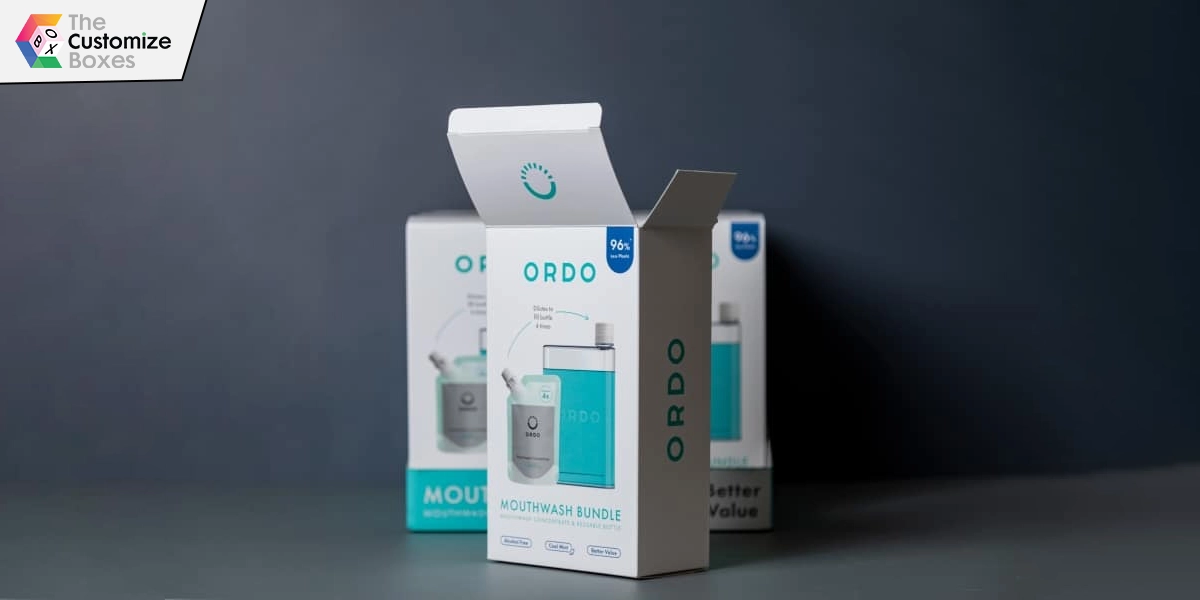
Over the last decade, the big conversation in packaging has been circularity. It emphasizes making boxes that are recyclable or compostable, using recycled content, or avoiding multi-material combinations that break recycling streams. In this regard, tuck-end packaging boxes are well-positioned. This is because they are typically paper-based and lightweight. However, sustainability trends for tuck boxes include:
- Moving to mono-material constructions such as paperboard without plastic windows, so the whole tuck carton stays in the paper stream.
- Increasing post-consumer recycled (PCR) fiber content in the board.
- Replacing solvent-based coatings with water-based varnishes or using mechanical finishes instead of metallized foils that complicate recycling.
Brands and packaging partnerships emphasize lifecycle thinking, from lower carbon footprint in shipping to sourcing certified fibers. That momentum is real, though adoption is uneven because cost and technical constraints still play roles.
Evolution of Tuck-End Packaging Boxes
Tuck-end boxes evolved from simple early 20th-century cartons used for lightweight items to today's more durable, secure, and versatile packaging. Some major evolutionary factors include:
Digital Printing and Mass-Personalization
Another big shift is the explosion of digital printing on packaging. Historically, full-color runs were cost-efficient only at scale because plate and setup costs for offset or flexo printing are high. However, digital printing removes this barrier. As it allows short runs, personalization, and rapid design changes. For tuck-end boxes, this means:
- Small brands can test multiple designs without large print minimums.
- Marketing teams can run region or season-specific artwork.
- Retailers can offer personalized packaging for campaigns.
Market analyses show strong growth in digital packaging printing. It is a change that will continue to unlock creativity and responsiveness in tuck-end production.
Packaging Automation, Compliance, and Smart Features
The evolution of tuck-end boxes isn’t just aesthetic. Automated machinery now erects, fills, and tucks millions of cartons per day in food and pharma lines. Regulation in pharmaceuticals and food items has pushed better tamper evidence, child-resistant features, and clearer information hierarchies onto those little cartons. Meanwhile, “smart” packaging experiments including QR codes, NFC tags, and invisible inks are being applied to tuck boxes for traceability, anti-counterfeiting, and consumer engagement.
What Comes Next?
The future of the tuck-end box looks like an orchestration of three forces, including sustainability, customization, and automation. Expect more mono-material solutions and recycled content, more digital, on-demand print jobs, and smarter lines that fold and seal boxes while adding traceable security features. For many brands, the tuck box will continue to be the inexpensive product where functionality meets storytelling.
Final Thoughts
Simple, affordable, and endlessly adaptable, that’s why tuck-end packaging boxes have thrived for more than a century. From Robert Gair’s industrial breakthroughs that birthed the folding carton to today’s digital and sustainable innovations, tuck-end boxes show how small structural ideas scale into global packaging systems that still leave room for surprise, craft, and brand personality.
Frequently asked questions
What is the history of tuck boxes?
Tuck boxes have a history tied to two main origins. Their name comes from British boarding schools, where they were used for storing snacks. And the modern version evolved in the early 20th century as cardboard became a widespread packaging material.
What was the primary purpose of a tuck box?
The primary purpose of a tuck box was to store personal items for students in boarding schools, particularly food and treats to "tuck" into the box. These boxes also held books, notebooks, and other personal effects for students away from home.
What is a tuck end?
A tuck end is a type of packaging closure where small side flaps and a larger middle flap on both the top and bottom of a box are folded and tucked in to secure the contents.
What is a tuck box used for?
A tuck box is used for packaging a variety of items, including cosmetics, electronics, and beverages that need high-end protection and visual appeal with a user-friendly packaging design.