
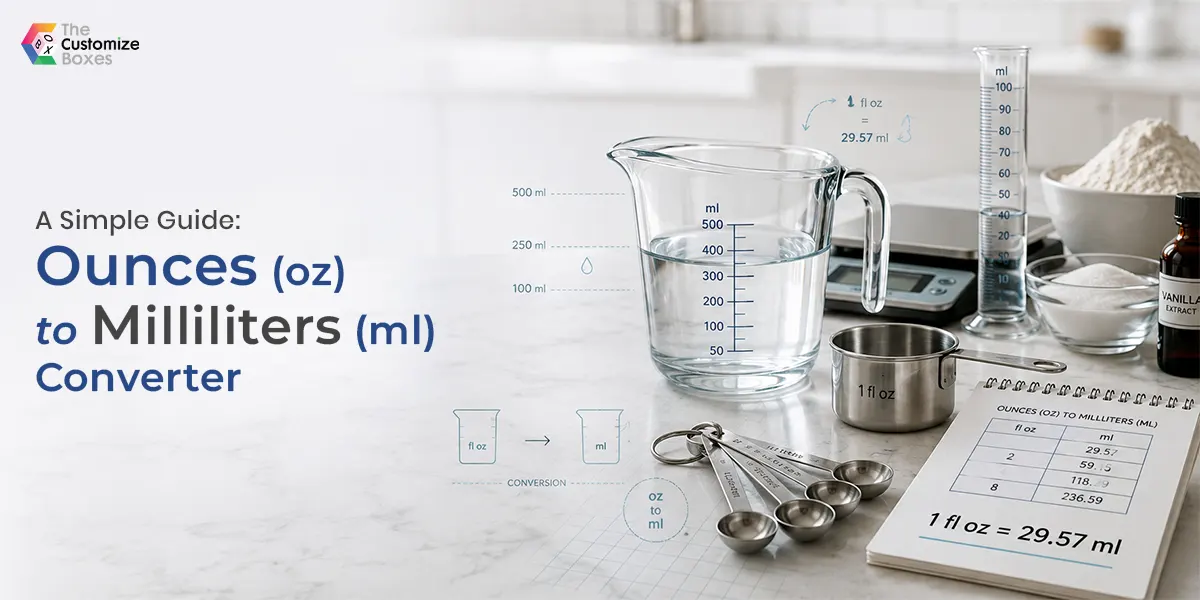
In this guide
A fluid ounce is a common unit of measurement of liquid items, and the conversion of the liquid into milliliters provides convenience in a variety of household and shopping uses. Unlike other measurement tools, ounces are used for small quantities of liquid items and are mostly used for cooking, baking, packaging, and international shopping decisions.
Continue to read on this blog to learn the concept in detail.
What is a Fluid Ounce?
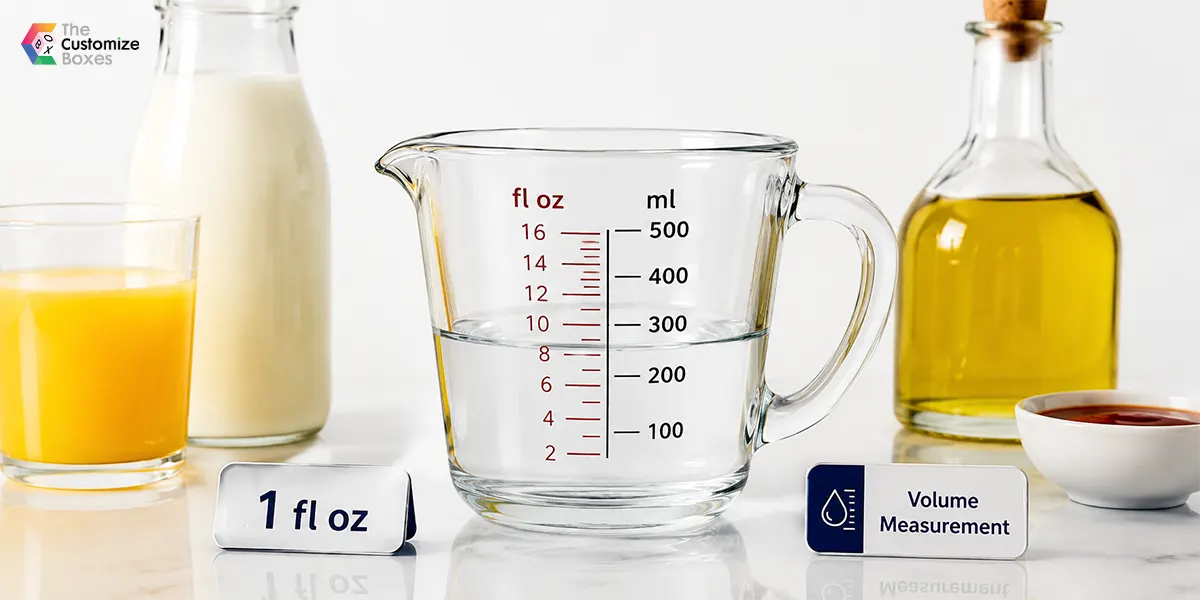
A fluid ounce, a small measurement unit, is a standard measurement unit for volume in terms of how much space a liquid occupies. This standard unit of measurement is popularly followed in the US and UK. They provide an easy and quick measurement for liquid items. And for weight-based measuring, ounces, the result will vary to an extent.
What are the General Uses of Fluid Ounces?
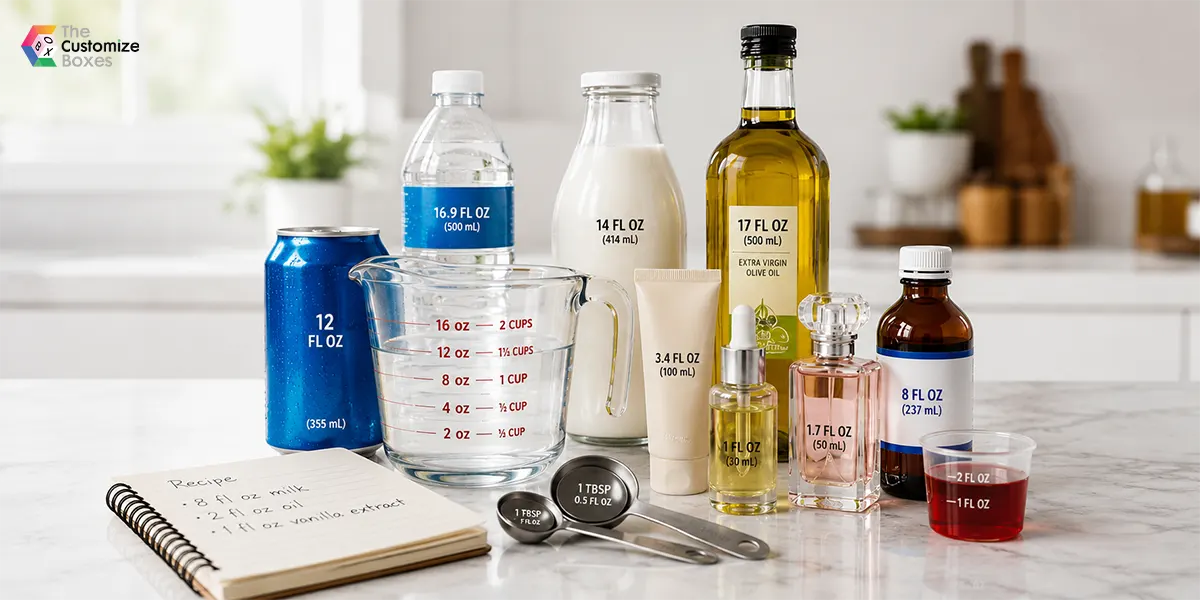
Fluid ounces are widely used for multiple purposes. They are used in different industries to measure liquid and semi-liquid items. Some popular industries that follow these measurement bases for their routine measurements include beverages, cooking and baking, nutrition and food labels, cosmetics and skincare, and healthcare and medicine.
Let’s explore the usage of fluid ounces in these industries:
Beverages
For beverage measurements, packaging, and converting into different standard units, ounces provide convenience. Retail packaging demands precise measurements for the liquids in cans or bottles, like soda cans or water bottles. The following are certain standard beverage equivalents:
- 1 Shot = 1.5 fl oz
- 1 Standard Cup = 8 fl oz
- 1 Pint = 16 fl oz
- 1 Quart = 32 fl oz
- 1 Gallon = 128 fl oz
Cooking and Baking
While cooking and baking, fl oz is an important measuring unit to provide the perfect quantities and help in producing quality, taste, and aroma for the specific recipe. Some popular uses of the fl oz in cooking and baking include water and stocks. They require perfect quantities to produce a quality soup, stews, or boiled grains.
Similarly, the case with dairy items, like milk, heavy cream, and sour cream. The same is the application and importance for oils and fats, like vegetable oils, olive oil, etc. You can not ignore syrups and extracts for the ideal perfect measurement to use in your recipe.
Some standard measurements used for cooking and baking include:
- 1 fl oz = 2 tablespoons
- 8 fl oz = 1 cup
- 16 oz = 1 pint
- 32 oz = 1 quart
Packaging and Food Labels
In the packaging of products, fluid ounces play a vital role in producing efficient and enough space for the volume of the liquid. Weight is measured in another way to calculate the mass of the items. These measuring units provide great convenience in meeting the required standards for liquid items, like beverages, liquid dairy, and cooking oils, etc.
These measuring units are common for viscous food and non-food items. Consumers most of the time are often facilitated to quickly value and compare the volume on the retail shelves. Ounces help in understanding how much space a product occupies on the retail shelves and display counters.
Cosmetics and Skincare
Fluid ounces are important for the packaging and consumers to compare products and their volume to make better and more calculated decisions for their purchase. A wide range of cosmetics and skincare items are packaged using the same standard unit of measurement, ounces.
Fluid ounces matter for different reasons in cosmetics and skincare products, like meeting regulatory compliance, FDA labeling requirements, and knowing the exact fluid capacity while planning to travel by air. A variety of cosmetics and skincare products include liquid makeup, perfume and fragrance, and serums and essences, etc.
What are Milliliters?
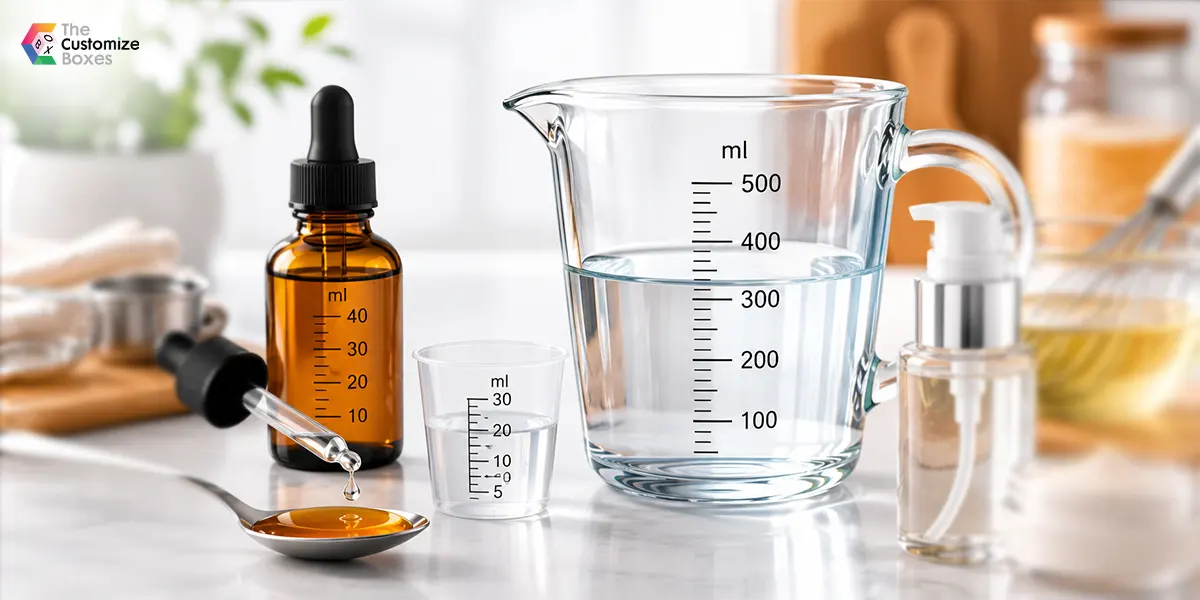
Milliliters (ml) is a unit of measurement used to measure liquid items. It is equal to 1/1000 of a liter, and can be expressed as 20 drops of water. Milliliters are commonly used in cooking and baking to measure different liquid items while following a recipe, taking a specific quantity of medicine, or choosing a specific amount of cosmetics.
Significance of Milliliters
Milliliters are a specialized measurement unit for liquid items and provide great convenience in measuring precise amounts of ingredients, providing safety and support in everyday life. This is one of the great measuring tools with scientific accuracy and geometric equivalence.
Get help by using this precise measuring unit for calculating medical dosage, converting recipes to different metrics, and choosing it for laboratory experiments.
How to Measure Ounces and Convert into Milliliters
Converting fluid ounces into milliliters is simple; just multiply the ounce value by the value 29.5735 to get the exact measurement and conversion. You can measure different standard units by using fluid ounces or milliliters. However, an ounce (oz) to milliliters (ml) converter can help you get the desired result by using a simple formula for the conversion of fluid ounces into milliliters:
Volume in OZ = Volume in Milliliters / 29.5735, or 30 by rounding it off.
The following table shows different amounts of fluid ounces to milliliters conversions. Explore the following to know what exactly the amount can be converted into different values:
Fluid Ounces (Oz) to Milliliters (ml) Conversion Table
|
Sr # |
Fluid Ounces (fl oz) |
Milliliters (ml) |
Cups |
|
01 |
1 fl oz |
29.5735296 |
0.125 |
|
02 |
2 fl oz |
59.1470592 |
0.25 |
|
03 |
3 fl oz |
88.7205888 |
0.375 |
|
04 |
4 fl oz |
118.2941184 |
0.5 |
|
05 |
5 fl oz |
147.867648 |
0.625 |
|
06 |
10 fl oz |
295.735296 |
1.25 |
|
07 |
20 fl oz |
591.470592 |
2.5 |
|
08 |
30 fl oz |
887.205888 |
3.75 |
|
09 |
40 fl oz |
1,182.941184 |
5 |
|
10 |
50 fl oz |
1,478.67648 |
6.25 |
|
11 |
75 fl oz |
2,218.01472 |
9.375 |
|
12 |
100 fl oz |
2,957.35296 |
12.5 |
Summing Up!
Ounces (oz) to milliliters (ml) conversion is an important learning benefit most of the time while you are considering following some specific recipes of cooking and baking. During packaging and labeling decisions, these calculations and measurement units will help you get the ideal fit and suitable packaging sizes to meet the required space and volume.
These requirements of the products meet the regulatory, FDA, and other compliance formalities depending on the products and packaging needs.
Frequently asked questions
What is 1 oz equal to in ml?
Fluid ounces can be converted into the exact number as 29.5735 milliliters (ml), though it is generally rounded off for common measurement and usage as 30 ml. It is important to know that if you are measuring weight, your measurement may vary and change depending on the density of the ingredient.
Is 8 ounces the same as 250 ml?
An exact 8 ounces is not the same as 250 milliliters (ml); rather, it is equal to 235 milliliters (ml), which is smaller than 250 milliliters (ml). The exact measurement to 250 milliliters (ml) can be calculated and expressed as 8.45 fluid ounces.
How many ml in a cup?
A standard US cup equals 240 milliliters (ml); however, in general, internationally, 250 milliliters is an accepted and commonly followed standard for home, cooking, and baking recipes, taken as 1 cup.